
As a teenager, it wasn’t unusual for me to come home in the middle of the night, smelling like beer, smoke, and other nastiness. I’d slowly open the front door, silently begging the Gods for no creaks, then gently creep up to the bathroom to shower off the evidence. This was societally accepted as something of a generational rite of passage, as was experimenting with drugs and alcohol. New data, however, shows that teens today aren’t experiencing the same thing.
The Gen Alpha Report, from Attest, a US research platform, found that 20% of 15- to 16-year-olds have tried alcohol, down from 71% of 10th graders in 2000. The survey also showed that 14% had tried cigarettes and 6% of teens had tried drugs, vs 44% of 10th graders in 2000.
Now this might sound like significant progress for parents, but what the survey also uncovered is that the teen and tween need for rebellion and vice that drove us to bush parties and watering down vodka bottles is transferring to a new high: the high of being online.
Saba Harouni Lurie, LMFT, ATR-BC, family therapist and owner and founder of Take Root Therapy, explains that the rebellion has moved online. “When I was younger, rebellion was visible. Now, a teen can sit in their room looking perfectly compliant while they’re engaging in all kinds of boundary-pushing behavior on their phone.”
Screen Addiction Is Real
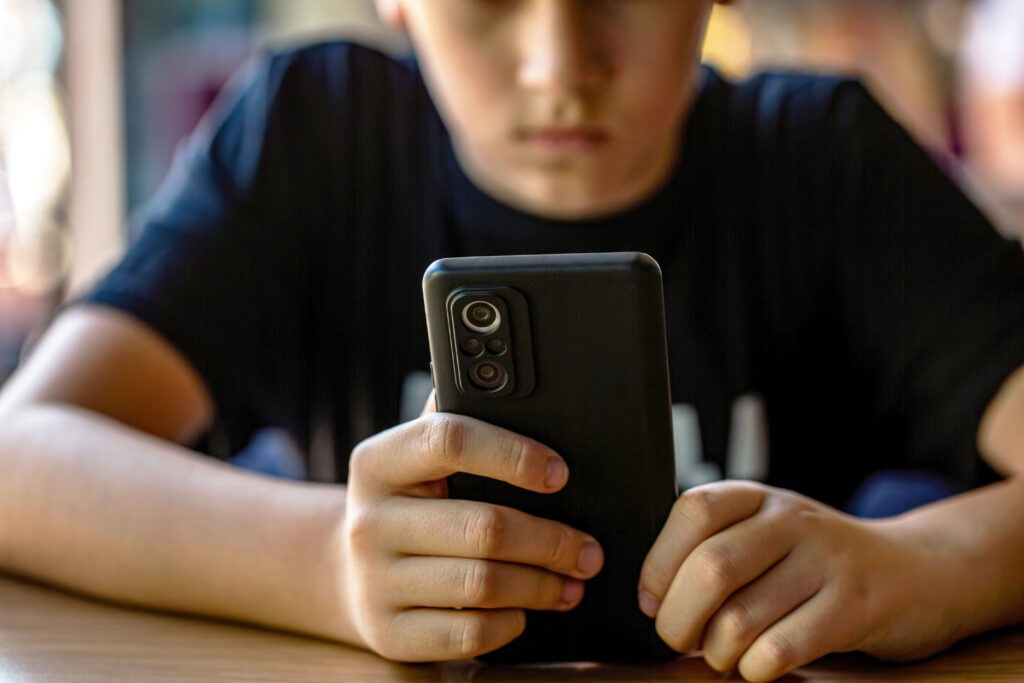
As we, the generation that has grown up with the internet, have seen, online and screen addiction is real. The high of being online, the prevalence of temptations and dopamine hits, and the potential to be “Social Media Famous” are having the same effect on teens and tweens that sneaking out and having some swiped beers and smokes with friends had on us.
Now, it might be hard for some parents to equate screen addiction with drug or alcohol addiction, but it’s about teens’ instinct to engage in risk-taking behaviour. Bark Technologies, a company providing parental control solutions to keep children safe online, found a shocking 63% of tweens and 77% of teens had interacted with sexual content of some kind in 2024, including receiving nude photos.
The report mentioned earlier from Attest found that 55% of 15–to–16–year–olds use social media apps like TikTok, YouTube, and Snapchat for at least 3 hours a day. In 2024, the Pew Research Center found that about one-third of teens say they use either TikTok, Instagram, Snapchat, Facebook, or YouTube almost constantly.
These are the seeds of addiction. Imagine if your teen were drinking a six-pack or smoking dozens of cigarettes a day. You’d have some definite concerns about their habits with these substances. As kids grow more socially isolated and spend more social time online, the potential to engage in risky behavior like drinking or smoking increases, and can have long-term effects on mental and physical health.
Joel Stoddard, MD, child and adolescent psychiatrist at Children’s Hospital Colorado, told Parents.com, “a lot of the time, health professionals think more about ‘risk’ behaviors instead of rebellion. While risky substance use and sexual activity have decreased, safe sex practice has decreased, and reporting mental distress has increased.”
One Dad’s Take On Talking To Kids About Drugs, Alcohol, Screens, And Beyond
As kids grow into young adults and beyond, they will naturally be curious about many things, both healthy and unhealthy. That curiosity is going to drive them to make dumb decisions and get into trouble. I feel that there are only two things we can do as parents about this.
First, be honest. There’s a real urge in most parents to avoid talking about their failures and bad experiences to be perceived as bulletproof by their kids. I know that it was hard for me to talk about things like job loss, drinking, and other things from my past, but in doing so, I showed my kids that it’s ok to fail. It’s ok to be down and out. It’s how you come back from it that matters. Also, telling a kid “hey, I’ve been there” is incredibly helpful to them, as they know that they are not alone in what they are going through and can see that it doesn’t have to be the end of them. You can be their hero in failure as well as success.
Second, I try very hard to be a safe space for my kids to talk about anything. It can be tricky at times to be one of the ones who can dish out consequences while fostering openness. Still, I want them to know they can tell me or talk to me about anything, however they feel comfortable, without worrying about judgment or punishment.
I think my role as their Dad is to help them through things and worry about potential disciplinary consequences later. Often, talking about and showing compassion and understanding for these issues means I don’t have to resort to punitive measures and can turn these moments into lessons they can carry with them as they grow up.
Some of the choices your kids will face will be similar to the ones you did. Others will be ones you never saw coming. In both cases, though, honesty and understanding are the keys to helping them through life’s struggles, old and new.