


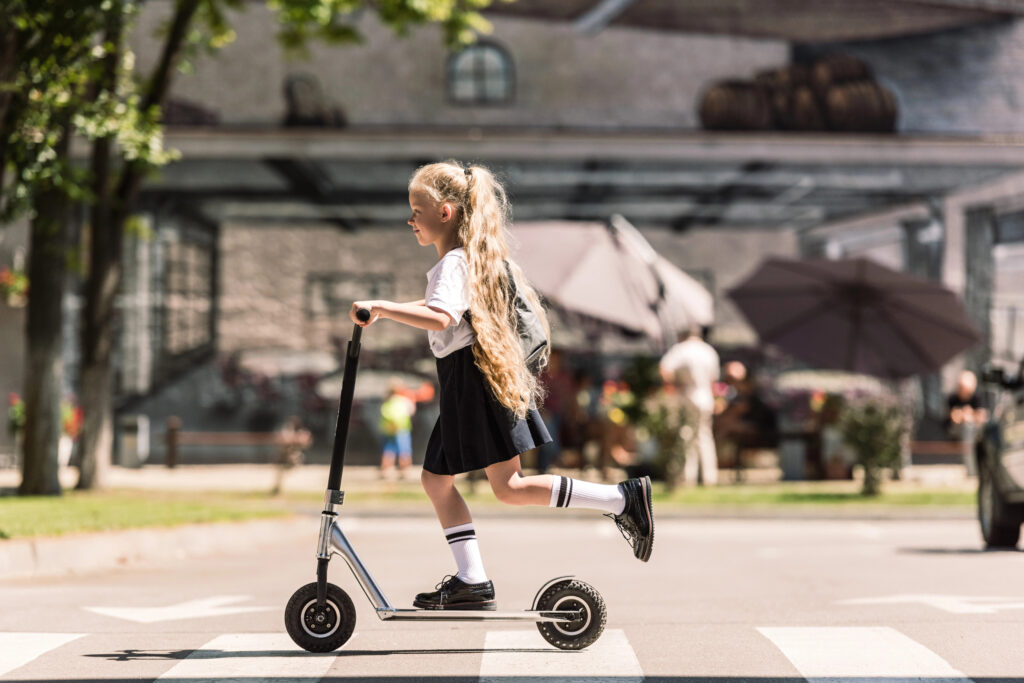
I drop my daughter off at her favorite skate spot, and before I can say anything, she assures me, “I know, have fun and be careful.” Sometimes she makes a joke by mixing the phrase up and saying, “Be fun, have careful.”
My younger daughter rides her scooter fast towards our destination, and I see a stick in the path. I blurt out the warning, “Watch out! Be careful!”
She blasts right over the stick anyway, and keeps moving, as I race to keep up.
Are we stripping these words of meaning through overuse? If so, what can we do to encourage safer choices without being tuned out?
How Many Times Daily Do We Utter That Phrase?
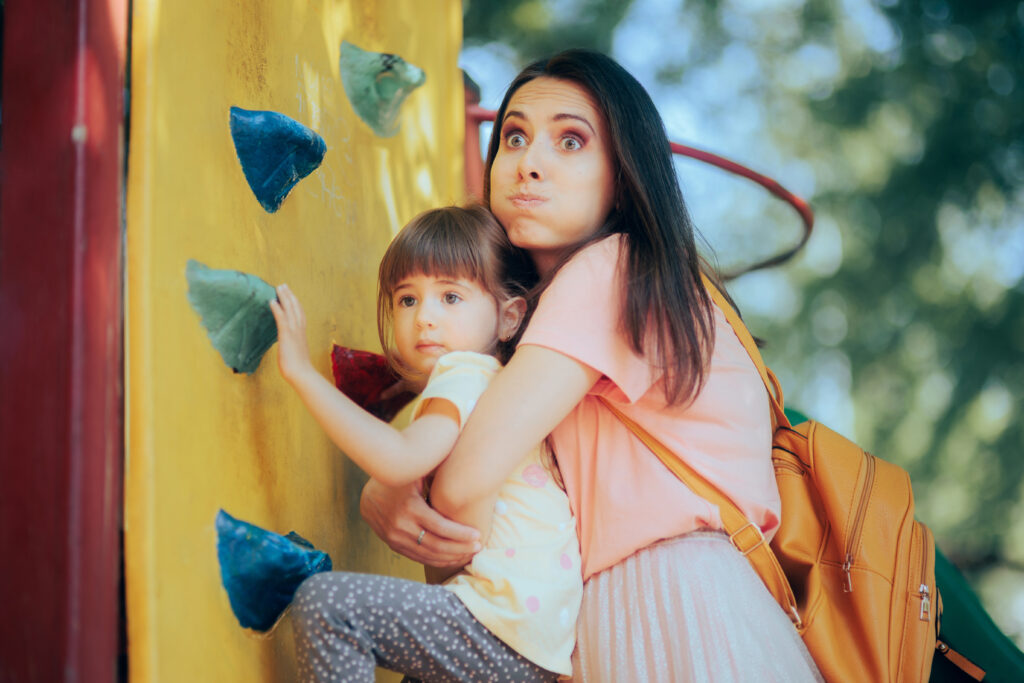
A new survey from Talker Research finds that parents say the phrase “be careful” an average of 27 times per day — more than once every hour.
I know I say it a lot myself, sometimes more than once in the same sentence. It’s perfectly normal for me to stop my adult child on the way out the door and say, “Please be careful driving, and then be even more careful than that.”
“Be careful” doesn’t just mean, “Don’t text and drive,” or “watch out for semi trucks,” though. It means, “I care about you and I want you to arrive safely.”
On the playground with the younger kids, it might mean “Watch where you’re going so you don’t accidentally knock another child down,” or “don’t walk in front of the swings,” or “that looks slippery,” or just “I’m anxious about you climbing so high.”
In fact, the way “be careful” becomes a stand-in for so many other, more specific warnings is part of why experts say it isn’t as effective as we hopea and can have negative repercussions.
What Are The Risks?
Eileen Kennedy-Moore Ph.D., a clinical psychologist, has been warning parents about this for years. Writing in Psychology Today, she explained.
“But this phrase gives children no useful information. It only tells them, ‘I’m anxious, so you should be, too!'”
Her concern is that when we say, “Be careful!” we aren’t giving our kids any concrete suggestions. They don’t know what cautions we’re asking them to take.
In my case, it might be better to say to my child, “Do you see that stick?” so that she can slow down or redirect her scooter around it.
On the playground, “The swings are moving!” or “Be aware of where you’re stepping!” might be more effective. Dr. Kennedy-Moore suggests that it’s best to give concrete instructions and give a reason if possible.
“Put your foot there so you can reach the next handhold.”
“Sand in the eyes hurts, so keep it low when you dig or build.”
When To Say Nothing At All, Or Skip The Warning
Dr. Kennedy-Moore adds that sometimes, it’s better to keep quiet instead.
This might be for times when the child has little or no control over the outcome and worrying will only add to their anxiety, or when they currently are taking reasonable precautions. This could include situations like warning your child to be careful on a field trip, where the teacher is responsible for their safety, or saying “Be careful not to fall!” as your child crosses the balance beam.
In these cases, we’re just passing on our worries to the kids, and may even affect their concentration and increase the risk of an error.
Other times, she says, we should consider encouragement instead of cautionary warnings.
This could mean saying, “You’ve got this, and I’m here if you need any help.”
Offering Specific & Helpful Guidance
Sometimes our kids do need guidance to make wise and safe decisions, and as adults, we can see what they can’t. In those cases, “be careful” may not be as helpful as a question that helps our child consider the situation and their options.
Instead, we might say, “Before you jump, have you looked to see where you might land, and what you might land on? Is this a good spot?”
We can always remind our child to pause during the activity and take precautions, like making sure the rocks aren’t slippery or checking where the handholds are before starting a climb.
Other times, it’s a good idea to review safety rules before heading out. That’s especially true when heading to a skate park, swimming pool, or trampoline park.
We All Want To Keep Our Kids Safe
I don’t want my kid to fall and scrape her knee, or break her glasses, or break something less replaceable, like a bone.
I shout, “Be careful!” because some instinct makes me feel that I can prevent those things with these words.
The truth is, I can’t. I can minimize risks by providing proper safety gear, and yes, she can still end up with scratches, scrapes, or even (knock on wood) injuries that require emergency room visits.
As much as I want to protect her, I also know that some of those injuries are a normal part of childhood, and part of growing up and learning how to make her own safe (or at least safer) decisions. It’s also about letting her learn to get up and try again.
Wanting to protect our babies from everything is natural. Learning how to balance the right amount of protection with some trust and a little growing room is a lot harder, but it’s also necessary.