


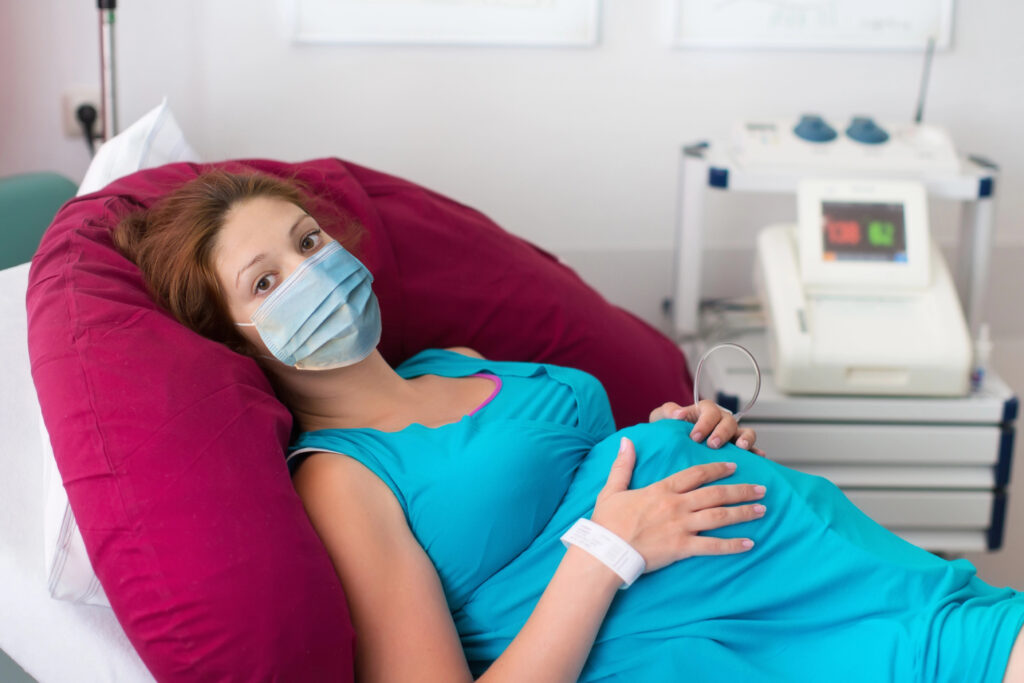
The long-term effects of COVID-19 on the world are still being tallied, and already include both mental health costs and economic ones. Now the long-term effects of COVID during pregnancy are being studied, and there’s some reason for concern.
One recent study found that babies born to mothers who had been infected with COVID during pregnancy were about 29% more likely to have observable developmental delays. Researchers are still trying to identify the exact link, but some factors appear to affect the outcomes.
Here’s what parents should know about the potential risks to their babies.
COVID During Pregnancy Associated With Higher Rates Of Neurodevelopmental Disorders
New research done at Mass General Brigham found that babies whose mothers had COVID during pregnancy were more likely to have developmental disorders and delays.
“The investigators studied 18,124 mother-child pairs. Among the 861 children whose mothers were SARS-CoV-2–positive during pregnancy, 140 (16.3%) received a neurodevelopmental diagnosis by 3 years of age, compared with 1,680 (9.7%) of the 17,263 remaining children from SARS-CoV-2–negative pregnancies.”
The effects don’t show up evenly, though. In this study (of over 18k babies and their mothers), boys appeared more likely to be affected than girls. Researchers also noted that an infection late in pregnancy seemed to correlate with higher rates of developmental delays than when the illness was earlier in pregnancy.
Much More Research Is Necessary
One study published in the Journal of the American Medical Association last year had slightly different findings, though notably it focused on a shorter time period (two years rather than three) and had a smaller sample group (fewer than 900 babies total, fewer than 100 of whom were exposed to COVID-19 in utero).
In that study, mothers self-reported developmental milestones, and all the babies had similar outcomes. The only noticeable difference was a tiny bump in self-calming abilities in 6-month-old babies who had been exposed to COVID.
That tiny edge appears to even out after the 6-month mark, and since it’s self-reported by the mothers, it’s not as clear-cut as when observed by neutral parties. Still, it’s one more observation that hints at some difference in brain activity and calls for more examination of the facts.
One significant hurdle is that COVID is still recent enough that our longest-term studies can’t yet observe beyond early childhood. Another is that we don’t have a good understanding of how many asymptomatic (or lower-symptom) cases may have gone undiagnosed.
What Should Parents Take Away From The Research For Now?

Currently, we have some studies showing developmental differences in COVID-exposed babies, while others show no statistically significant differences. That’s enough to recommend caution, but shouldn’t lead parents to panic or overcorrect.
As all parents watch their babies for developmentally appropriate milestones, those whose babies were exposed to the virus before birth should also keep an eye out for any delays or missed milestones and speak to a pediatrician if there are concerns.
Anyone who is pregnant or planning a pregnancy should discuss with their doctor the best choices for their own health and their baby, and make informed decisions about vaccination, masking, and limiting exposure risks.
Those who are pregnant and have been exposed to COVID should contact their doctor and seek advice on the best current practices for limiting the effects of the illness.
Meanwhile, be prepared for researchers to update with newer and clearer information as they continue to examine the effects of COVID-19.