



After nearly two decades of heartbreak and failed treatments, one couple has finally conceived a baby — not through a new drug or surgery, but through a breakthrough in artificial intelligence. Research from Columbia University Fertility Center has reported the first confirmed pregnancy achieved using an AI-guided sperm recovery system, signaling a potential revolution in how reproductive medicine addresses severe male infertility.
The achievement, detailed in The Lancet, marks the first time an AI-based microfluidic platform successfully located and isolated viable sperm in a man previously diagnosed with non-obstructive azoospermia. In this condition, semen appears normal but contains no measurable sperm. For many couples in this situation, the only options have traditionally been donor sperm or adoption.
“A semen sample can appear totally normal, but when you look under the microscope, you discover just a sea of cellular debris, with no sperm visible. Many couples with male-factor infertility are told they have little chance of having a biological child,” said Dr. Zev Williams, Senior Author and Director of the Columbia University Fertility Center.
How AI Found What the Human Eye Couldn’t
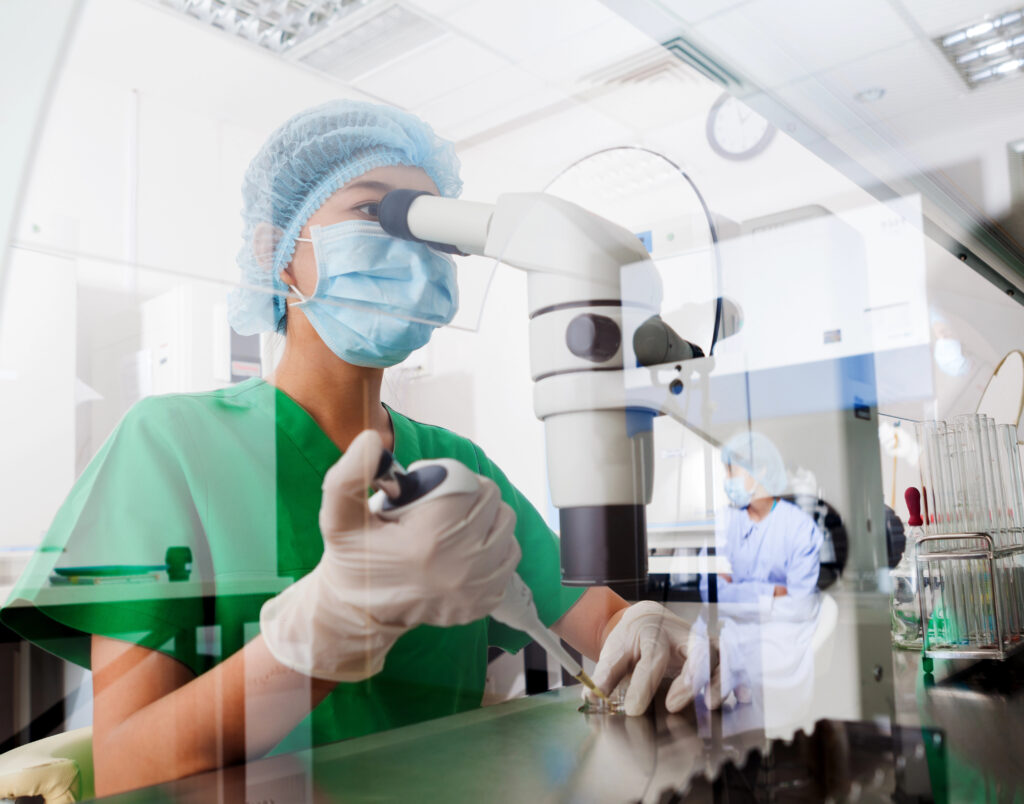
The Columbia team developed the Sperm Tracking and Recovery (STAR) system — an AI-guided imaging and microfluidic technology designed to find viable sperm where none seem to exist. Unlike conventional methods that rely on manual searches or invasive testicular extraction, STAR uses ultra-high-speed image capture and machine learning to identify rare sperm cells in real time.
In a single two-hour session, STAR analyzed 2.5 million microscopic images of a semen sample and identified seven sperm cells, two of which were motile. Both were injected into mature oocytes via intracytoplasmic sperm injection (ICSI) — a procedure where a single sperm is directly inserted into an egg. Two embryos developed, and one resulted in a viable pregnancy.
This level of detection would be nearly impossible for even the most experienced embryologists performing manual searches, which can take hours or days. The AI model, based on the deep learning architecture You Only Look Once (YOLO), divides each image into a grid and predicts the likelihood of sperm presence in each grid cell, achieving a precision of up to 0.95. The system even tracks motion across multiple frames to verify the sperm’s identity before isolating it via microfluidic channels.
The process is fully enclosed, sterile, and non-invasive, eliminating the risks of tissue extraction while maintaining sample integrity — a major leap forward in both biosafety and patient comfort.
A 19-Year Journey to a Single Breakthrough Moment
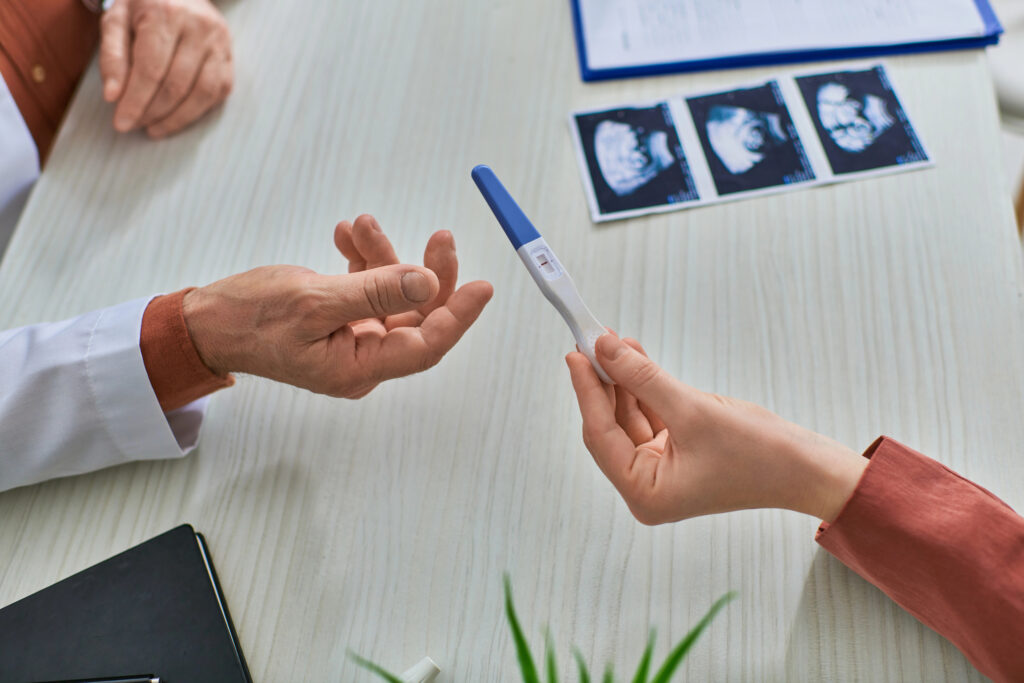
The couple involved in this landmark case had been trying to conceive for 19 years, enduring numerous failed IVF cycles, multiple surgical sperm retrievals, and nearly twenty oocyte retrieval procedures across several clinics.
Despite years of effort, only one embryo had ever reached the transfer stage — and it did not result in pregnancy.
When the STAR system was used, it located just two viable sperm in the sample. Those two cells — statistically microscopic odds — changed everything. Thirteen days after embryo transfer, the patient received her first positive pregnancy test. An ultrasound eight weeks later revealed a healthy embryo with a heartbeat of 172 beats per minute, marking the first recorded pregnancy achieved with AI-guided sperm recovery.
As Motherly noted, this isn’t about replacing human compassion or expertise with machines — it’s about extending what medicine can do when technology and empathy work in tandem.
A Shift in Fertility Care and Accessibility

Male factor infertility contributes to up to 40% of infertility cases, and conditions like azoospermia or cryptozoospermia account for 10–15% of those. Until now, options for these patients have been limited to surgical extraction or painstaking manual microscopy, both of which can be expensive, invasive, and often unsuccessful.
AI-driven systems like STAR change that equation. By automating detection and reducing physical intervention, the technology could increase success rates while lowering costs and reducing patient trauma. It also democratizes access — technicians at smaller clinics, equipped with AI assistance, could potentially achieve what only a handful of elite laboratories can currently offer.
Researchers emphasize that this technology is still in its early stages. Larger clinical trials are already underway to confirm reproducibility and evaluate success across more diverse patient populations. But even as a single case, this outcome represents a milestone — not just for science, but for the couples who have long been told their dream of a biological child is out of reach.
A Glimpse Into the Future of Fertility
The fusion of machine learning, imaging, and microfluidics in STAR represents the next frontier of reproductive science. It reflects a broader shift in medicine toward precision tools that augment, rather than replace, clinical judgment — helping doctors focus more on patient care and less on impossible searches under the microscope.
For one couple, that innovation has already rewritten their story. And for millions more still searching for answers, it offers something even more powerful: hope.
The study titled First clinical pregnancy following AI-based microfluidic sperm detection and recovery in non-obstructive azoospermia is published in The Lancet.