



Just a few years ago, during the worst of the COVID-19 pandemic, regular handwashing got a significant boost as folks made their best efforts to minimize the spread of germs and illness.
Today, most of the precautions that emerged during that crisis have disappeared. There’s relatively little social distancing or masking, and regular sanitization may still occur at schools, daycares, and some businesses, but it’s not as consistent or visible.
Frequent handwashing is still an essential part of good health practices, though. Are your kids washing their hands as often as they should?
Are We Raising Germaphobes?
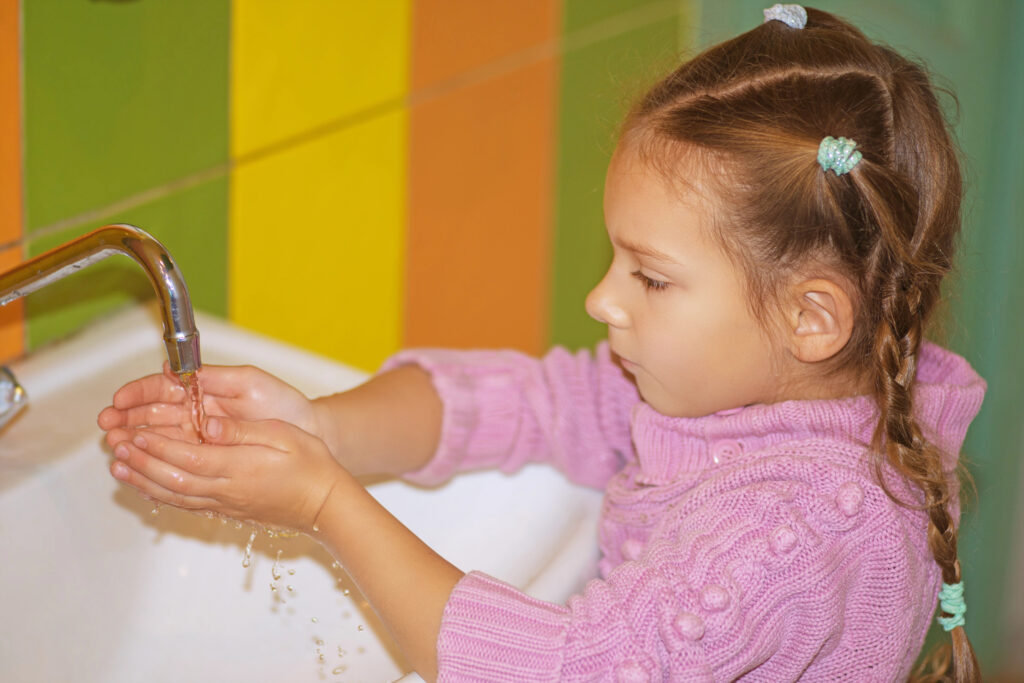
COVID hit a lot of people’s mental health hard, and our kids were not immune. Many lost loved ones, or had loved ones disappear into hospitals, and even those who weren’t touched directly by the virus saw changes in their routines, including school closures and lifestyle changes imposed by parents’ loss of income.
It’s no surprise that the kids who felt the impacts of the pandemic have some different feelings about health and hygiene practices than were the norm pre-COVID, but should we worry that they’re becoming “germaphobes” who wash their hands too often?
Exactly how often should our kids be washing their hands? How much is too much, and what other signs should we watch for?
Gen Z May Be Washing Their Hands More — That’s Not A Bad Thing
There is some data suggesting that, post-pandemic, teens and young adults may be washing their hands more often, though it’s not definitive.
There’s a study published in 2021 that uses data gathered from 2003 to 2017 and seeks to compare hand-washing across countries. The study defined the handwashing practices of more than 350k teens aged 13-17 as either “appropriate” (always washing hands with soap before eating and after using the restroom), “inappropriate” (some handwashing but less than the previous category), or “lack” (those who said they never or rarely washed their hands with soap).
Ultimately, the numbers are relatively similar globally, except in Europe, where kids were more than twice as likely to report that they “always” wash their hands with soap after using the toilet and before eating.
In the Americas, that study found that 28% of students reported “appropriate” handwashing, and another 61% reported at least some handwashing. (Global numbers were 30% and 60%.)
Compare that to a more recent survey of college students, shared by College Rover. Granted, this study is significantly smaller — only 1,000 students — but it still offers a glimpse of a generation that washes their hands much more frequently.
Of those kids and young adults, none admitted to skipping the handwashing entirely. About 1 in 8 (17%) say they wash their hands only 1-5 times per day, with about half (47%) saying they wash their hands 5-10 times a day.
Another 23% say they wash their hands 11-15 times per day; 9% report 16-20 washes per day; and 4% say they wash more than 20 times per day.
What’s The “Right” Number Of Handwashes?
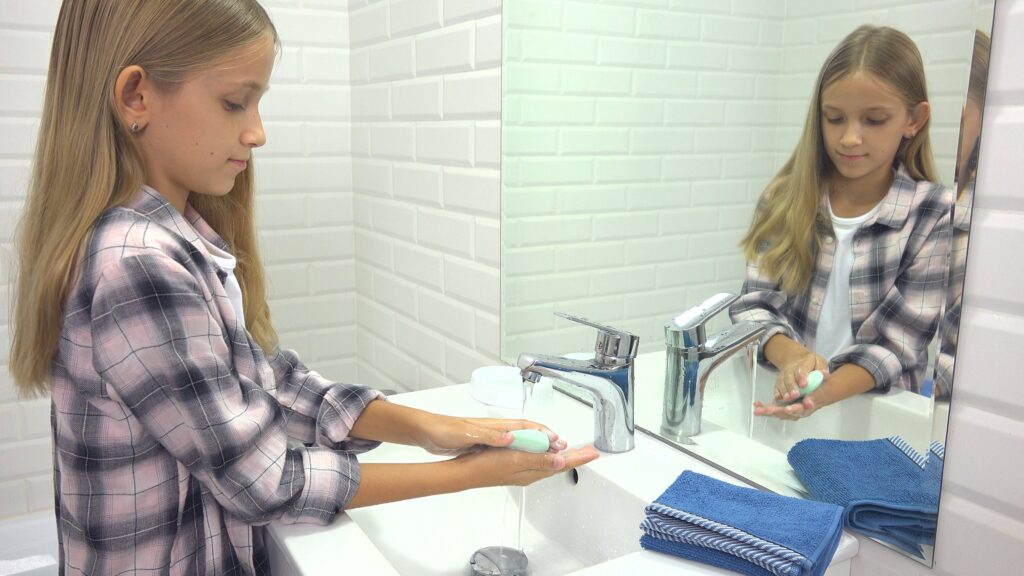
If we use the global health survey standard (which is still lower than the CDC standard), “appropriate” handwashing would include washing before eating and after using the bathroom. (The CDC would like to add handwashing after touching pets, before and after preparing food, after blowing your nose, and after handling garbage, among other activities.)
For most teens and young adults, that’s going to add up to a minimum of 10 times per day — meaning that a majority of the college students surveyed above may meet that standard, compared to fewer than a third in the longer-running study that covers the period when those same kids would have been in middle and high school.
As for the “right” number of handwashes, that would depend on the activities one is involved with throughout the day, but another COVID-era study found that those who washed their hands 5-10 times daily were sick less frequently than those who washed their hands fewer times, and those who washed their hands 6-10 times daily were even less likely to become ill. (It found no increased prevention in those who washed more frequently than 10 times per day.)
When Should Your Child Wash Their Hands?
Kids are germ magnets. They touch everything, they like to put things (including their hands) in their mouths, and most of them spend a huge chunk of every day in a room full of other kids doing the same things.
Washing hands frequently can help reduce the amount of germs that cause illness. In fact, in one study, when a school scheduled four handwashing times per day, stomach bugs and related absences dropped by 50%, according to Healthy Schools Healthy People, which also notes that in a separate study, a 4-week handwashing education program reduced 1st-graders’ absences by 20%.
At a minimum, your child should wash their hands after every time they use the bathroom, and before every meal. They should also wash after dirty or germy activities, like playing outside or wiping their drippy nose.
Kids should be encouraged to wash for at least 20 seconds with soap. They can time this by singing the “Happy Birthday” song twice or using a timer. Teach kids to wash all surfaces of their hands, including nails and the spaces between fingers.