


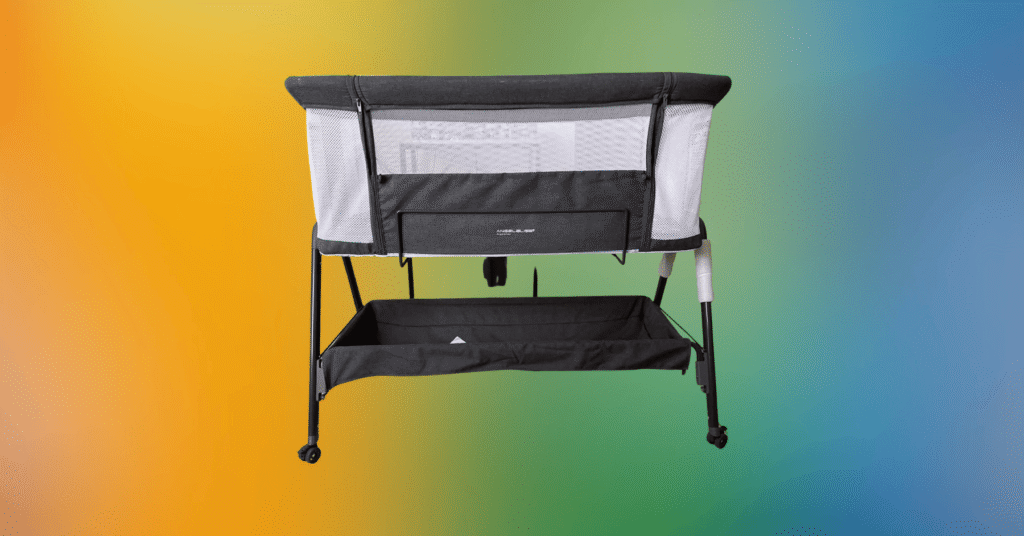
Health Canada has issued an important safety alert for parents and caregivers after determining that the Angelbliss Baby Bassinet Bedside Crib, previously sold on Amazon.ca, does not comply with Canadian safety regulations and may put infants at risk of entrapment and suffocation.
The affected product is the Angelbliss Baby Bassinet Bedside Crib with Storage Basket and Wheels, marketed as an easy-folding, height-adjustable bedside sleeper for newborns. It was sold by Liuzihao on Amazon.ca.
The page for the product has seen been removed from Amazon.ca, however, it is still being listed by Amazon.com (click here for more info on the crib from Amazon US).
While the Consumer Protection Safety Commission (CPSC) has not issues a similar warning at this time in the United States, we always urge parents to act with an abundance of caution when recalls have been issued by other agencies, including those from outside the United States.
Why the Bassinet Is Being Flagged
Health Canada’s testing found that the sleeper fails to meet the Cribs, Cradles and Bassinets Regulations. The main concern is the inclined sleep surface, which exceeds 7 degrees. That incline may cause a baby to slide into unsafe positions, raising the risk of entrapment, suffocation, and serious injury.
The agency also clarified what a bedside sleeper is: a product with three closed sides and an open side designed to sit directly beside an adult bed. Some models feature four sides with one that lowers to create an opening above the mattress support. These types of products must meet strict safety standards because they sit adjacent to a caregiver’s bed.
What Parents Should Do Right Now
Health Canada is urging anyone who purchased this Angelbliss bassinet to:
- Immediately stop using the product.
- Safely dispose of it so it cannot be reused, donated, or resold.
- Regularly check the Healthy Canadians Recalls and Safety Alerts database for updates.
Parents are also encouraged to report any incidents or safety concerns involving this or any other consumer product using Health Canada’s Consumer Product Incident Report Form.