Educational TV for kids has come a long way since I was a kid. Gone are the preachy, boring lessons, and instead, kids have a ton of shows to choose from that teach everything from math to social science, art to reading, digital literacy, and more.
When I was working in children’s animation, it became clear that today’s creators of kids’ entertainment take the approach that learning through discovery or adventure is far more memorable and engaging for today’s kids. This is apparent in the number of shows out there that cover different subjects. Even the shows that cover more than one of these competencies do so in a way that doesn’t jam anything down a kid’s throat and encourages them to see learning as something fun.
Below is a list of some of the best shows for kids that take an educational approach while remaining entertaining. This list could have been three times as long, to be honest, but as I learned from Mr. Rogers, it’s always a good idea to put your best foot forward and not overdo it.
The Best Educational Shows For Kids That Teach Math
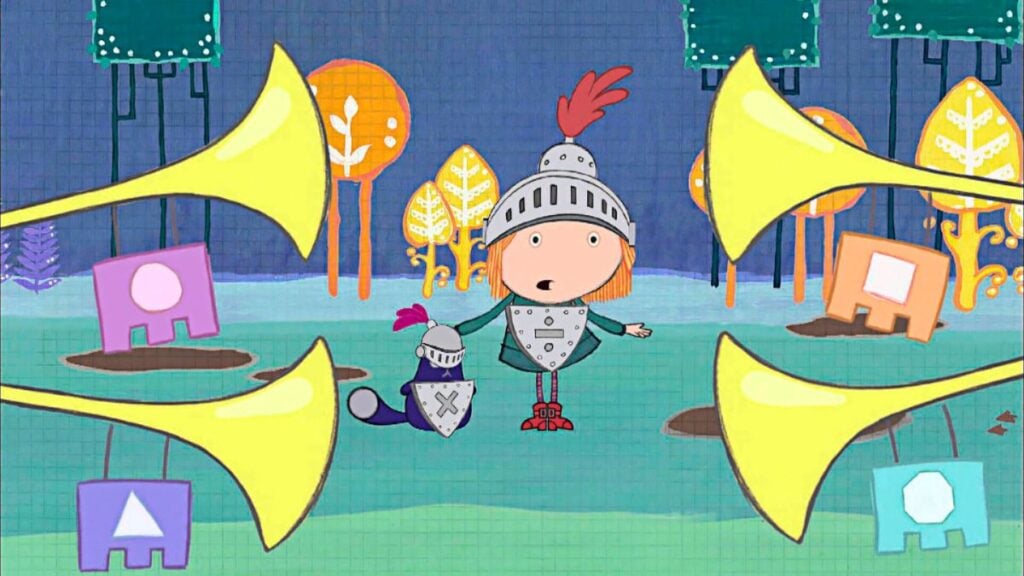
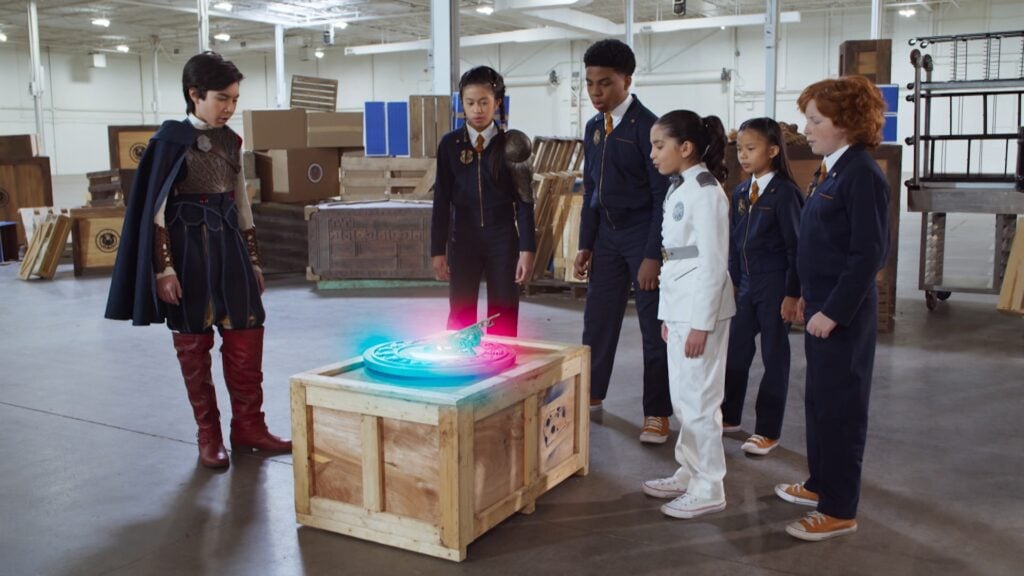
These math picks show how numbers solve real problems in kid-sized adventures. Peg + Cat introduces counting, shapes, and patterns through musical, story-based fixes to everyday dilemmas, while Odd Squad turns measurement, operations, and logic into secret-agent missions. Together, they build early numeracy and reasoning by letting kids apply math to puzzles, clues, and cause-and-effect.
Peg + Cat
Recommended Ages: 3–6
Streams on: PBS Kids / Amazon Prime
Peg and her sidekick, Cat, tackle fun adventures that just so happen to involve counting, shapes, and patterns. Each episode unfolds like a miniature quest, where Peg faces a relatable problem—like baking too many cupcakes or figuring out how to cross a river—and must use numbers to save the day. The animation is bright, charmingly sketched, and filled with musical cues that help kids remember math concepts.
Why Peg + Cat Is Great For Teaching Kids Math: Peg + Cat offers kids step-by-step problem-solving skills and demonstrations of how patterns come together. There are also songs and visual puzzles that make math concepts accessible and playful. What makes it so effective as a math show is how naturally it integrates early numeracy into storytelling—kids don’t feel like they’re being taught; instead, they are part of Peg’s team solving mysteries together. The show’s rhythm, repetition, and humor make foundational math ideas stick in a way that feels effortless and fun.
Odd Squad
Recommended Ages: 6–9
Streams on: PBS Kids
Any show that makes kids into secret agents is fun. Throw in some math and everyone’s happy! Odd Squad Agents work through logical mysteries using measurement, counting, and other math skills to keep their city safe. Each episode feels like a quirky detective story where kids get to be the heroes, solving unusual, silly, and often hilarious problems using real math reasoning.
Why Odd Squad Is Great For Teaching Kids Math: The best part of Odd Squad is the focus on logical reasoning to solve mysteries. Kids will love solving problems alongside the agents and seeing how math works in their everyday lives. It builds critical thinking and collaborative problem-solving by encouraging kids to approach challenges with curiosity. The humor and energy make even advanced math ideas feel approachable, turning what might be abstract concepts into exciting, real-world puzzles.
The Best Educational Shows For Kids That Teach Reading
This reading duo blends superhero fun with skill-building. Super Why! walks kids through phonemic awareness, letter-sound decoding, and comprehension by rewriting classic tales, and WordGirl levels up vocabulary using witty examples in context. Both shows make print concepts and word meanings stick by showing how language actively changes outcomes in a story.
Super Why!
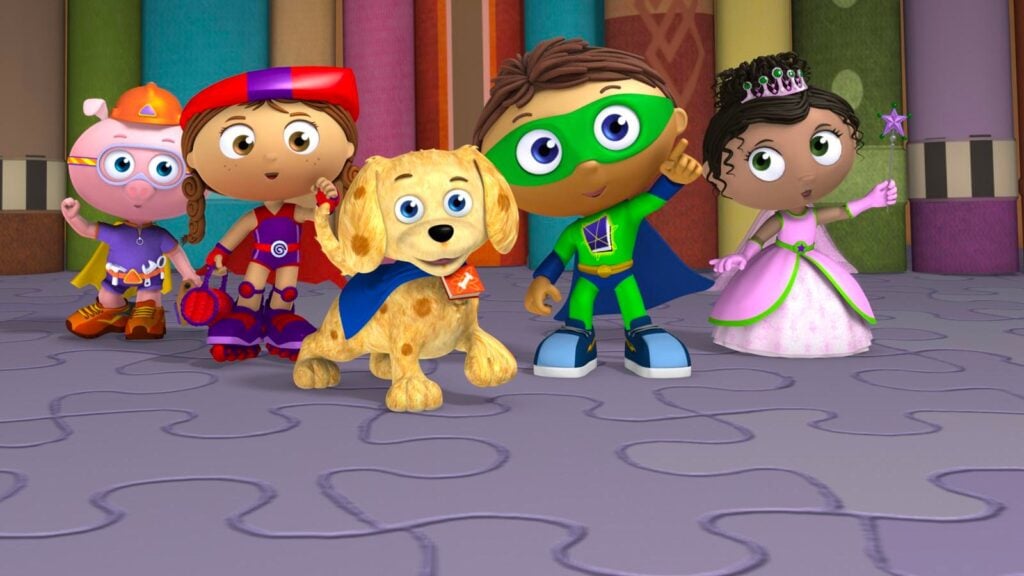
Recommended Ages: 3–6
Streams on: PBS Kids
Wyatt literally lives inside a storybook, and whenever he and his friends have a problem, they transform into superheroes! Wyatt becomes Super Why and solves problems using letters, words, and reading comprehension. Each episode takes kids into a familiar fairy tale that gets remixed through reading and wordplay, turning storytime into a whole adventure of decoding and discovery.
Why Super Why! Is Great For Teaching Kids To Read: Kids who like reading will enjoy this, but the way it works through sentence structure, punctuation, and sound to decode words is fantastic. Super Why? decodes phonics and words through colorful stories and play. The show highlights how reading gives characters the power to reshape outcomes, empowering kids to see language as something magical. Super Why’s comic book episode is particularly great, showing that stories are living things that grow when you interact with them.
WordGirl
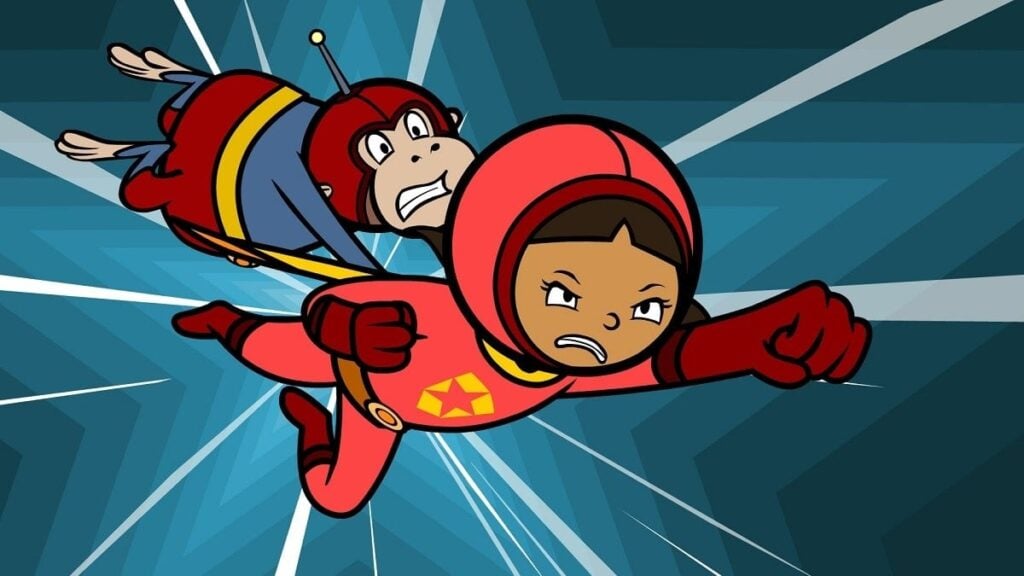
Recommended Ages: 6–9
Streams on: PBS Kids
WordGirl builds vocabulary by introducing new words and demonstrating them in action. Normal kid Becky Botsford transforms into WordGirl and battles villains with advanced vocabulary, turning word knowledge into a genuine superpower. Each story has a fun comic-book style, with plenty of humor and clever wordplay that make learning new words feel like a game.
Why WordGirl Is Great For Teaching Kids To Read: WordGirl is great for vocabulary-curious kids, as it teaches practical language skills while explaining the vocabulary. The superhero action brings it all to life with fast and funny adventures. Beyond word definitions, it teaches kids how to use language to communicate clearly and think critically about meaning. It’s witty enough for adults to enjoy but smart enough to keep kids hooked as they expand their lexicon.
The Best Educational Shows For Kids That Teach Writing & Storytelling
These shows focus on how ideas become stories. Pinky Dinky Doo models narrative structure—character, setting, problem, and resolution—by inventing imaginative tales to solve everyday challenges. At the same time, Ask the StoryBots highlights how words, sentences, and formats (songs, sketches, explanations) work together to communicate. Kids see that storytelling is both creative and organized, with clear building blocks they can copy.
Pinky Dinky Doo
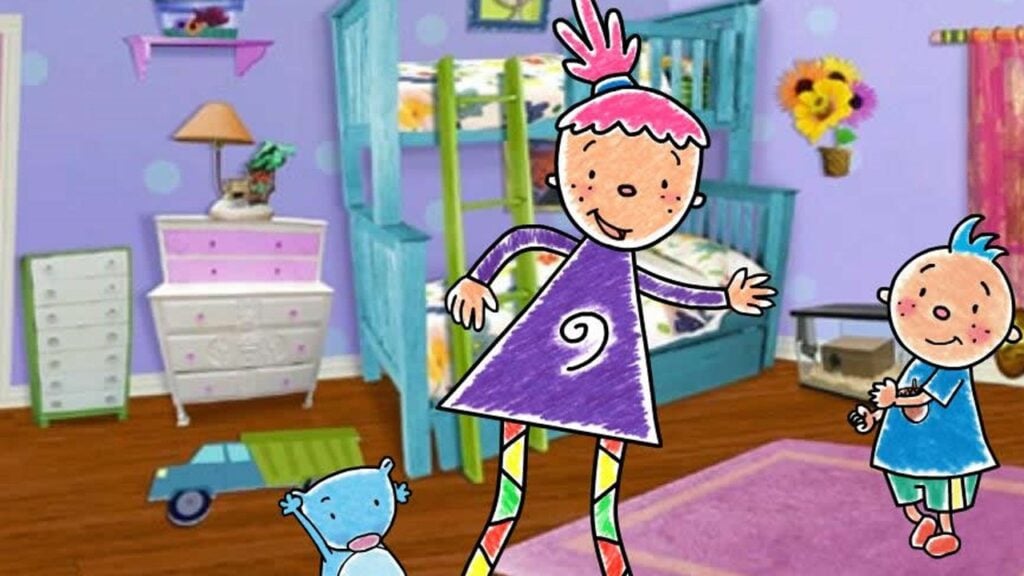
Recommended Ages: 3–6
Streams on: PBS Kids
Pinky Dinky Doo tells imaginative stories that solve everyday problems. Each episode revolves around Pinky inventing a tale that helps her little brother or friends navigate real-life issues, turning storytelling into a form of problem-solving. The colorful animation and creative plots make it a delightful introduction to the basics of narrative thinking.
Why Pinky Dinky Doo Is Great For Teaching Kids Writing & Storytelling Skills: Pinky Dinky Doo shows young writers how to build stories piece by piece. It teaches structure without sacrificing creativity, making writing and storytelling feel approachable. The show introduces concepts like characters, setting, and resolution, helping preschoolers grasp how ideas connect. It’s an excellent springboard for kids who love making up their own stories, encouraging them to see imagination as a practical tool.
Ask the StoryBots
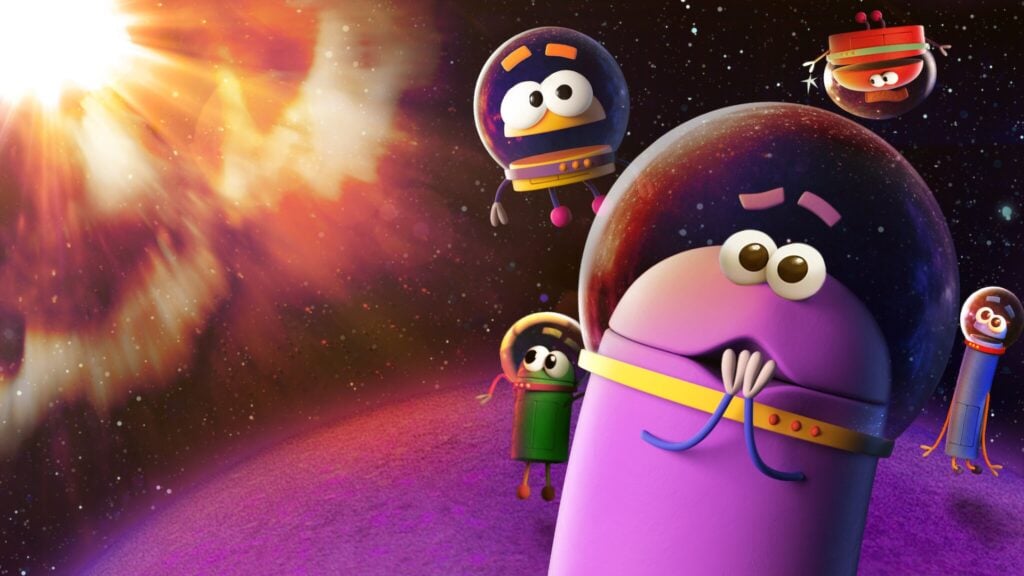
Recommended Ages: 4–8
Streams on: Netflix
The StoryBots are treasures, and they explore how letters, words, and sentences come together to build stories. Each episode answers a big question—like “How does night happen?” or “Where do songs come from?”—through a mix of sketch comedy, animation, and catchy songs. The balance of humor, music, and genuine curiosity keeps both kids and adults entertained.
Why Ask the StoryBots Is Great For Teaching Kids Writing & Storytelling Skills: StoryBots are great because they take wordplay and show it to kids through action and song. A song might seem like a strange way to explain writing concepts, but its catchiness and repetition reinforce the ideas being taught. It’s also great for developing early composition and comprehension skills, as kids see how storytelling works across different formats—from songs to scripts to conversation.
The Best Educational Shows For Kids That Teach Science
Hands-on inquiry drives both series. The Magic School Bus Rides Again takes field trips inside bodies, ecosystems, and the cosmos to demonstrate observation, modeling, and experimentation. At the same time, Sid the Science Kid starts with a real-life question and uses classroom investigations to gather evidence. Together, they normalize curiosity, data collection, and the practice of explaining “why” with simple, testable ideas.
The Magic School Bus Rides Again
Recommended Ages: 6–9
Streams on: Netflix
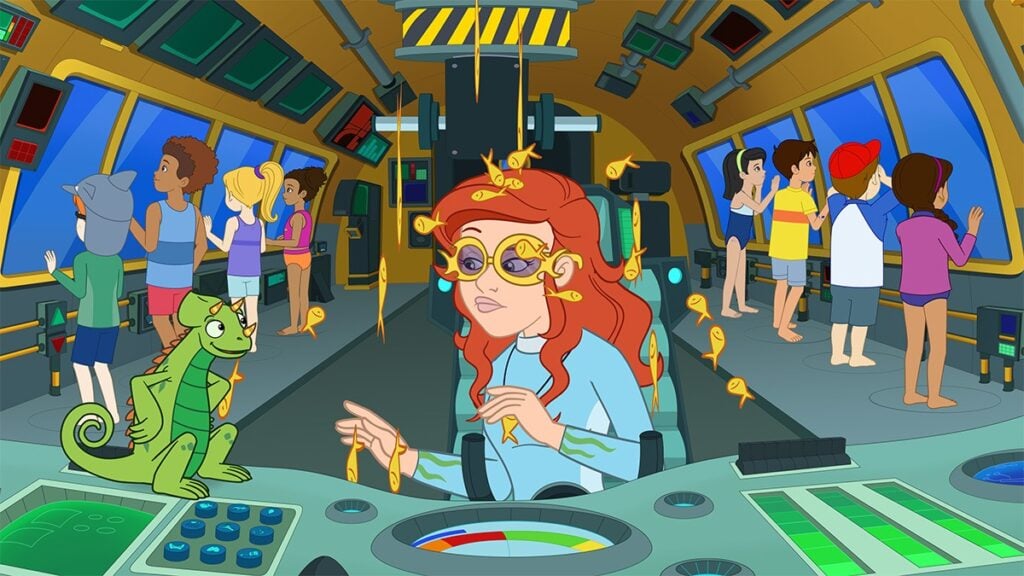
Ms. Frizzle (the younger sister of Miss Frizzle) takes her students literally into the subjects they have questions about, via the titular Magic School Bus. With field trips that range from exploring the human body to orbiting the planets, every episode feels like a science experiment brought to life. The show’s updated animation and humor keep the spirit of the original while introducing new scientific discoveries.
Why The Magic School Bus Rides Against Is Great For Teaching Kids About Science: There’s a myriad of educational benefits to the Magic School Bus, but the best part is how complex ideas and scientific concepts are explored through creative adventures. It teaches kids about science, but also about asking questions and finding answers through data and experimentation. The series emphasizes curiosity, teamwork, and the excitement of discovery, helping kids see that science is all around them—and always worth exploring.
Sid the Science Kid
Recommended Ages: 3–6
Streams on: PBS Kids
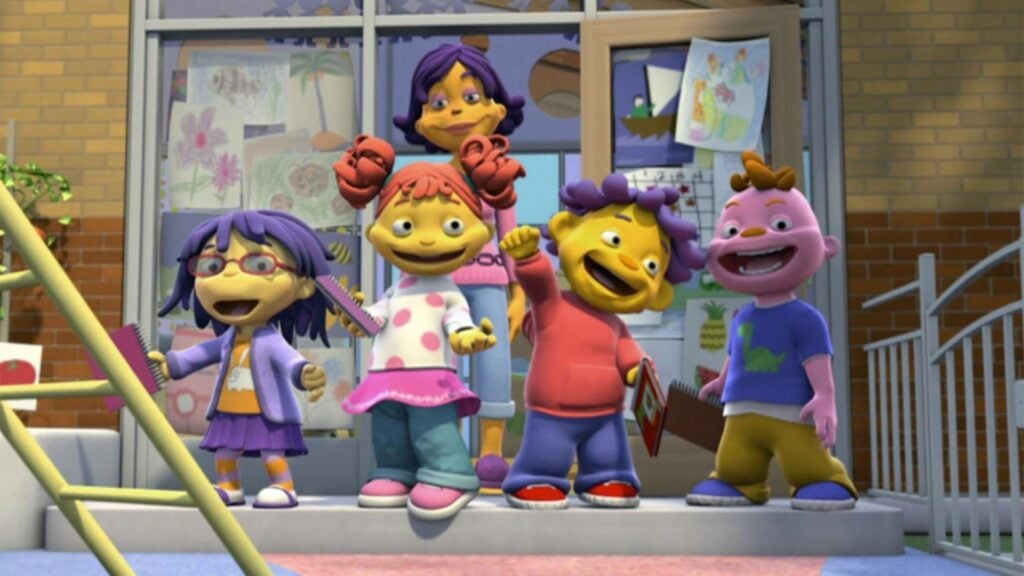
Sid takes his name seriously and investigates everyday science questions, conducts experiments, and takes down his observations. Each episode begins with a problem Sid notices in his daily life and follows him as he explores his classroom, where his teacher and friends help him test ideas and draw conclusions. The tone is upbeat, funny, and always kid-friendly.
Why Sid the Science Kid Is Great For Teaching Kids About Science: Preschool scientists love Sid the Science Kid because he figures out the answers to science questions in a fun, visual way that’s easy to understand. The show also encourages kids to get out and explore the world around them, discovering what science they can uncover. Its focus on observation and critical thinking builds the foundation for scientific literacy, showing kids that every “why” can lead to a new adventure.
The Best Educational Shows For Kids That Teach History
These history picks present facts through memorable formats. Liberty’s Kids follows young reporters through foundational events and figures to show cause-and-effect and multiple perspectives, while Horrible Histories uses sketch comedy and music to anchor names, dates, and practices in long-term memory. Kids learn to connect stories with evidence and recognize that history is both factual and interpretive.
Liberty’s Kids
Recommended Ages: 8–12
Streams on: PBS Kids
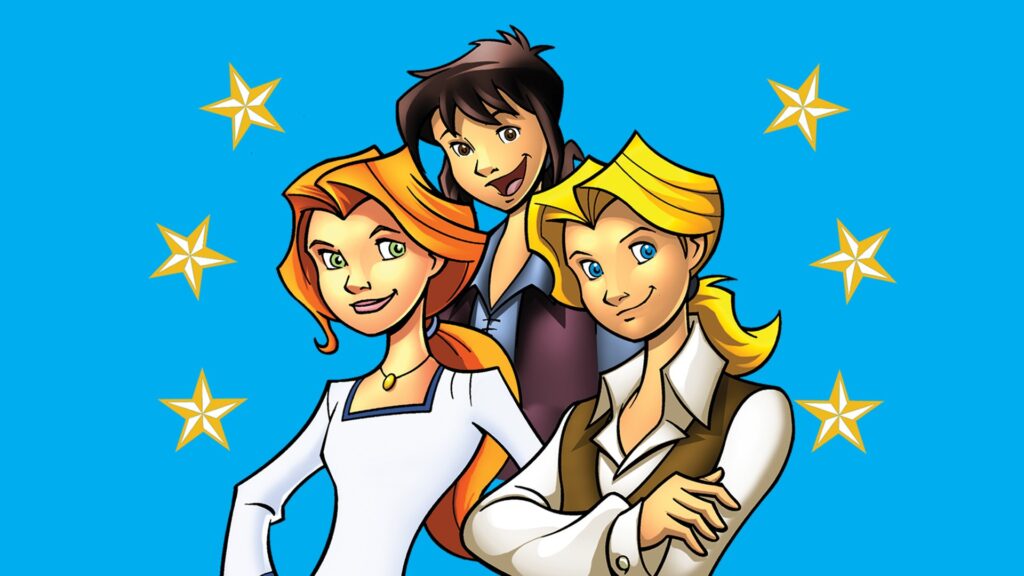
The real history of the Civil War is presented in Liberty’s Kids, but in a way that’s easy to understand and kid-appropriate. The show follows three young reporters who cover pivotal moments in early American history, including the signing of the Declaration of Independence and Paul Revere’s famous ride. It’s richly detailed, grounded in historical fact, and still accessible.
Why Liberty’s Kids Is Great For Teaching Kids About History: Kids who love true stories will be into Liberty’s Kids because it tells stories on their level, without skirting the facts. The show makes the stories more enjoyable and memorable while leaving out some of the scarier parts of revolutionary history. It’s an excellent way to introduce children to civics, journalism, and critical thinking about how history is recorded and remembered.
Horrible Histories
Recommended Ages: 8–12
Streams on: Max
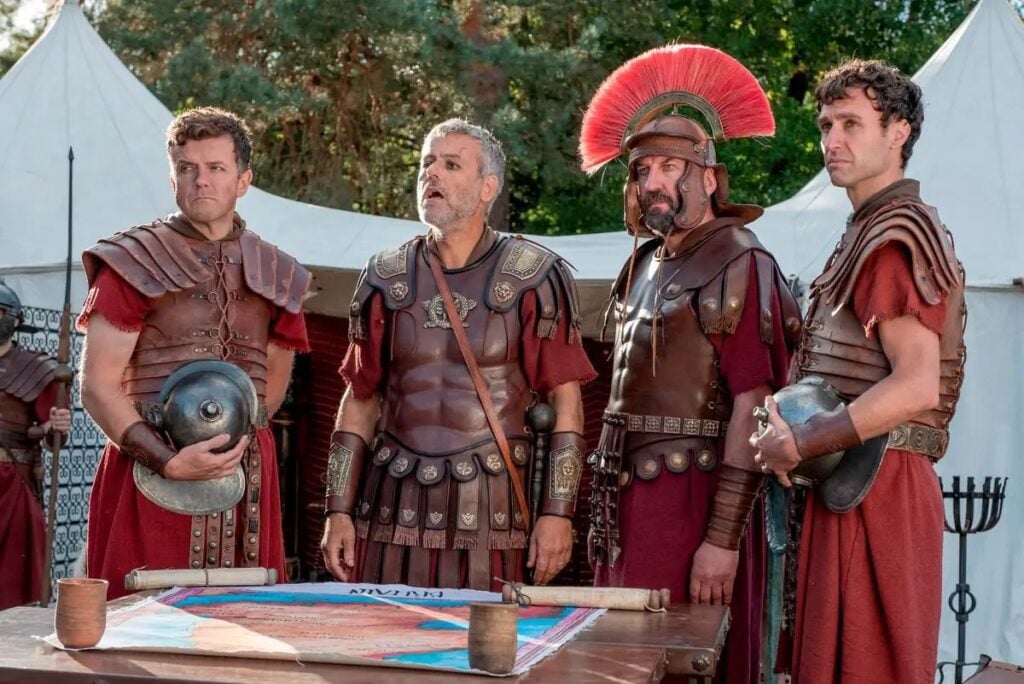
Horrible Histories is an anthology featuring comedic sketches that highlight surprising, gross, and humorous facts from history all over the world. It combines slapstick humor, parodies, and music to make everything from the Roman Empire to the World Wars both fascinating and funny. The format makes it easy to digest, and its playful tone makes history feel alive.
Why Horrible Histories Is Great For Teaching Kids About History: Any historically inclined kid will enjoy the humor and music, as well as the facts and stories being explored. Horrible Histories ticks all the boxes that kids like— gross, silly, and funny— but also tells the tales of some of the most critical moments in history. It also teaches that learning about the past can be as much about laughter as it is about lessons, helping kids retain historical context through entertainment.
The Best Educational Shows For Kids That Teach Geography
Geography becomes an adventure map. Dora the Explorer builds spatial vocabulary, sequencing, and basic wayfinding with maps and landmark clues. At the same time, Go Jetters jet to real-world sites and explain what makes each landmark and region unique. Kids practice directions, recognize global places, and link location with culture and environment.
Dora the Explorer
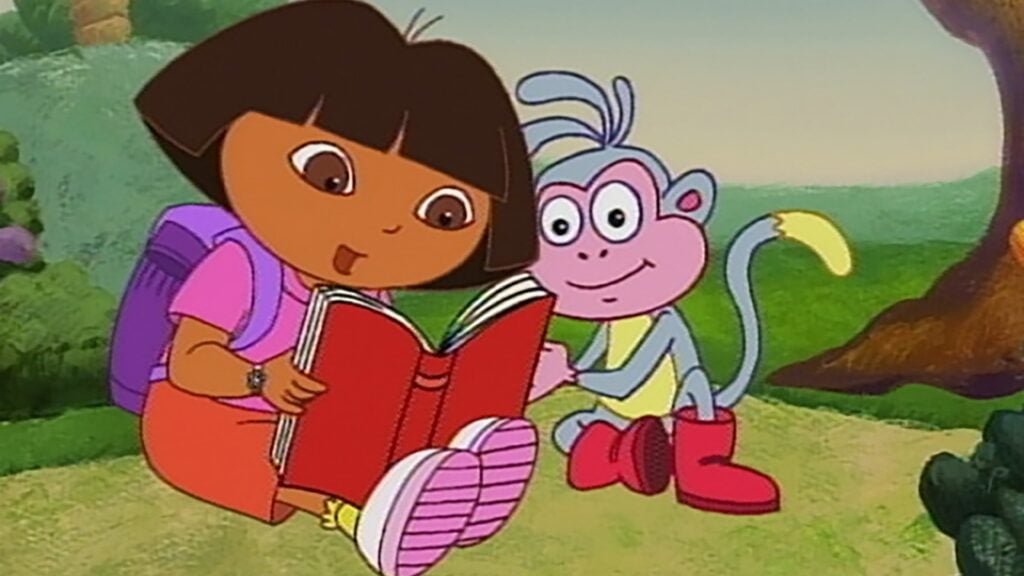
Recommended Ages: 3–6
Streams on: Paramount+ / Nick Jr.
If your kid likes geography, chances are they love maps. There’s no animated kid and monkey duo better at maps than Dora and Boots. Each episode sends them on a journey through forests, mountains, and rivers as they work together to find lost items or help friends, all while using clues, landmarks, and, of course, the trusty talking map. It’s bright, interactive, and invites kids to participate by answering Dora’s questions out loud.
Why Dora the Explorer Is Great For Teaching Kids About Geography: Dora the Explorer teaches kids to use maps, identify landmarks, and understand spatial terms. This builds navigational and geographic skills while exposing kids to a range of cultural aspects of Dora’s adventures. It also introduces basic Spanish vocabulary and multicultural understanding, helping children connect geography with language and diversity. The repeated structure of each episode reinforces direction, sequencing, and problem-solving.
Go Jetters
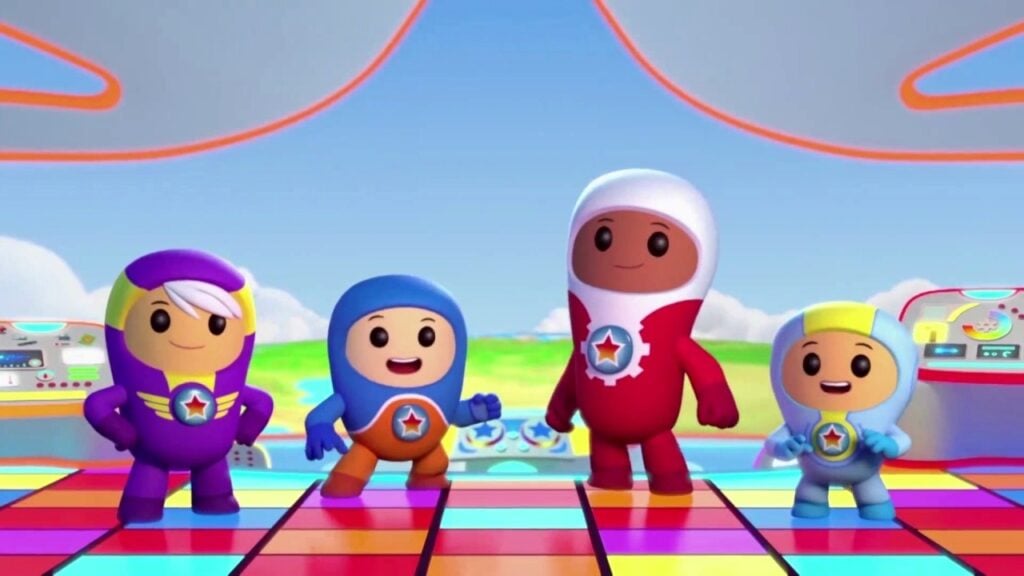
Recommended Ages: 3–6
Streams on: PBS Kids
Go Jetters’ short, high-energy episodes pack a lot of punch for a short show. The animated team of four heroes travels the globe with their teacher, Ubercorn, who delivers quick-fire geography facts with disco flair. Together, they visit landmarks like the Great Wall of China and the Eiffel Tower, learning what makes each site special while saving them from the comic villain Grandmaster Glitch.
Why Go Jetters Is Great For Teaching Kids About Geography: The Go Jetters’ team’s missions make learning about global locations and landmarks exciting while exposing kids to the cultures and people that built them. The series teaches map awareness, world regions, and environmental responsibility, helping preschoolers recognize that the Earth is full of amazing places worth protecting. Its upbeat style keeps learning adventurous and encourages curiosity about travel and global diversity.
The Best Educational Shows For Kids That Teach Social Studies
Community and character skills take center stage. Arthur tackles friendship dynamics, fairness, responsibility, and simple civics through everyday dilemmas, while Mister Rogers’ Neighborhood models empathy, self-regulation, and respect in calm, direct conversations. Kids see how personal choices affect others and how communities work when people cooperate.
Arthur
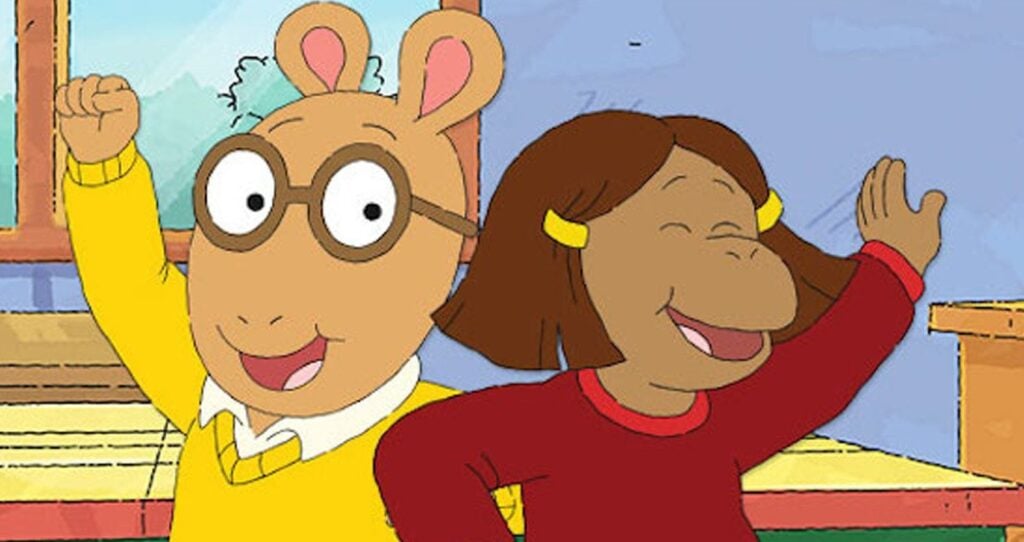
Recommended Ages: 6–9
Streams on: PBS Kids
A classic, Arthur softly and assuredly teaches kids how to explore and navigate social challenges with empathy, fairness, and even civic responsibility. The show follows Arthur Read and his group of friends as they face the ups and downs of growing up—dealing with friendship troubles, honesty, fairness, and sometimes even voting for class president. It’s long-running for a reason: its gentle humor and relatability never go out of style.
Why Arthur Is Great For Teaching Kids About Social Studies: While Arthur is listed as a show for “Civics-interested kids,” whatever that means, it’s really about learning to compromise, treat others as you want to be treated, and social responsibility. These are everyday skills that everyone needs, now more than ever. Arthur also highlights the importance of empathy, inclusion, and respect for differences, providing conversation starters about kindness and cooperation in families and classrooms alike.
Mister Rogers’ Neighborhood
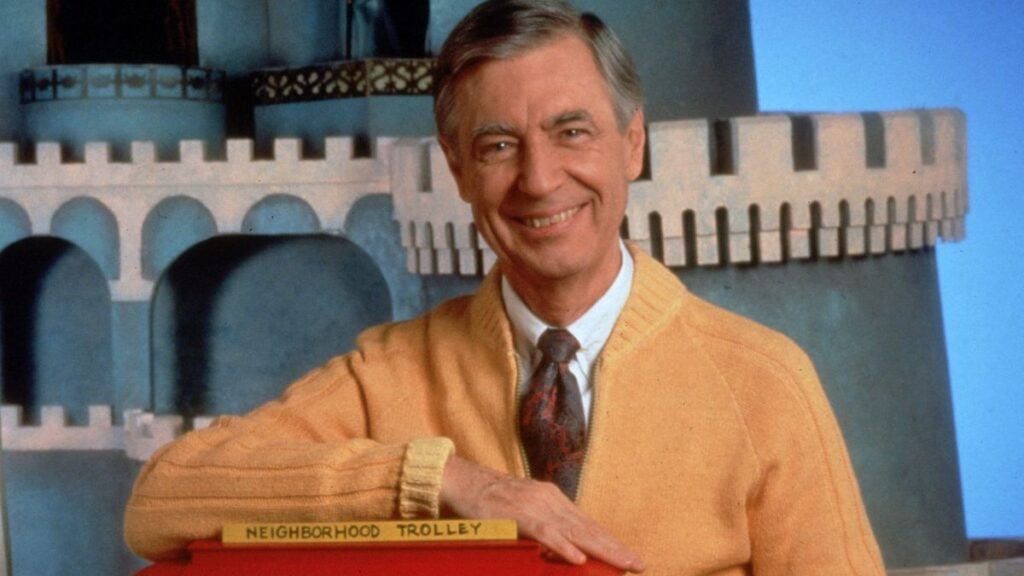
Recommended Ages: 3–6
Streams on: PBS Kids
Are you going to find a better teacher about friendship, community, and respect than Fred Rogers? Probably not. Rogers’ calm, kind, and gentle demeanor shows a model of emotional understanding in everyday scenarios that I’d bet they didn’t even realize at the time. Every episode invites children to slow down, reflect, and think about their feelings, their neighbors, and their sense of belonging.
Why Mister Rogers’ Neighborhood Is Great For Teaching Kids About Social Studies: Each episode of Mr. Rogers’ Neighborhood teaches kindness and responsibility through calm, accessible play. Rogers speaks directly to the kids about problem-solving through empathy, and even when it moves to the Land of Make Believe, those lessons still come through. The consistent format and soothing pace provide emotional security, while the content builds lifelong values about caring for others and oneself.
The Best Educational Shows For Kids That Teach Computers & Digital Literacy
These shows translate computing logic into kid actions. Helpsters solves tasks by breaking them into ordered steps, reinforcing sequencing, patterns, and debugging, while Cyberchase wraps algorithms, logic, and problem decomposition in an adventure against a tech-savvy villain. Kids learn that complex challenges become manageable when planned and tested step by step.
Helpsters
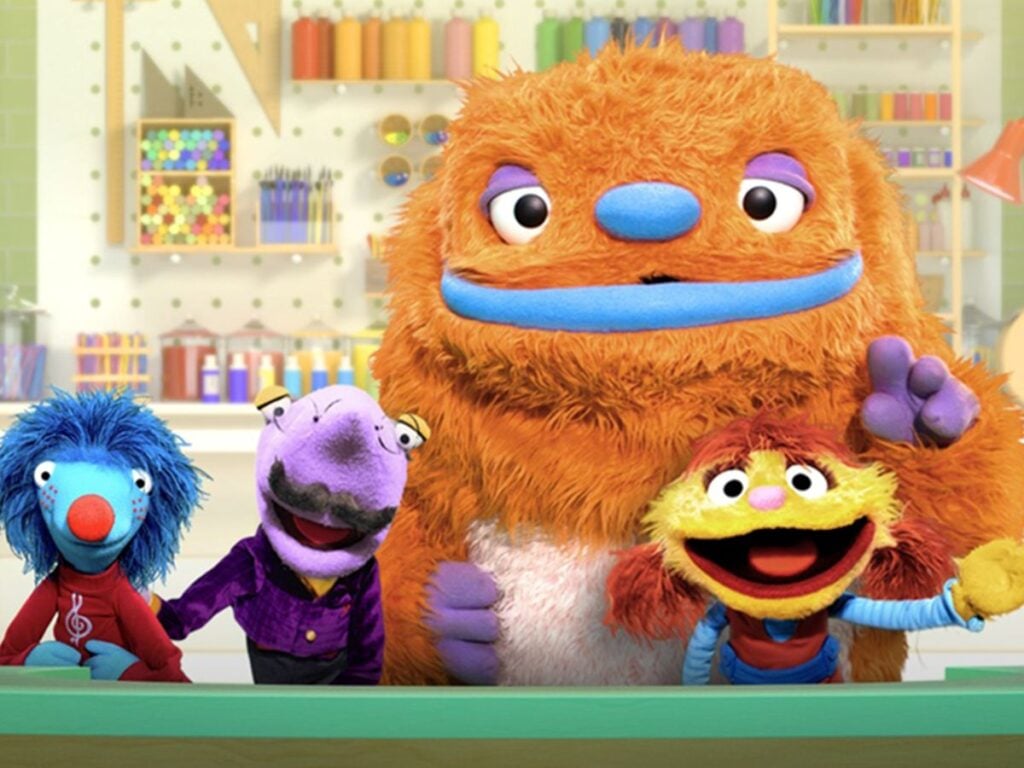
Recommended Ages: 3–6
Streams on: Apple TV+
The Helpsters, a group of friendly monsters, deal with tasks by breaking problems into steps. Each story begins with a visitor bringing them a challenge—like organizing a parade or fixing a toy—which they solve using sequencing, pattern recognition, and teamwork. It’s a vibrant, puppet-filled world created by the makers of Sesame Street, making it instantly engaging for preschoolers.
Why Helpsters Is Great For Teaching Kids About Computers & Digital Literacy: Tech for preschoolers is in every toy store now, and if your kid shows an aptitude for it, Helpsters can, well, help. Kids love seeing problem-solving framed as a game, and just by watching, they are exposed to computational thinking skills all wrapped up in playful adventuring. It’s a perfect early introduction to the kind of logic that underpins coding, presented through colorful, song-filled problem-solving that never feels technical or dry.
Cyberchase
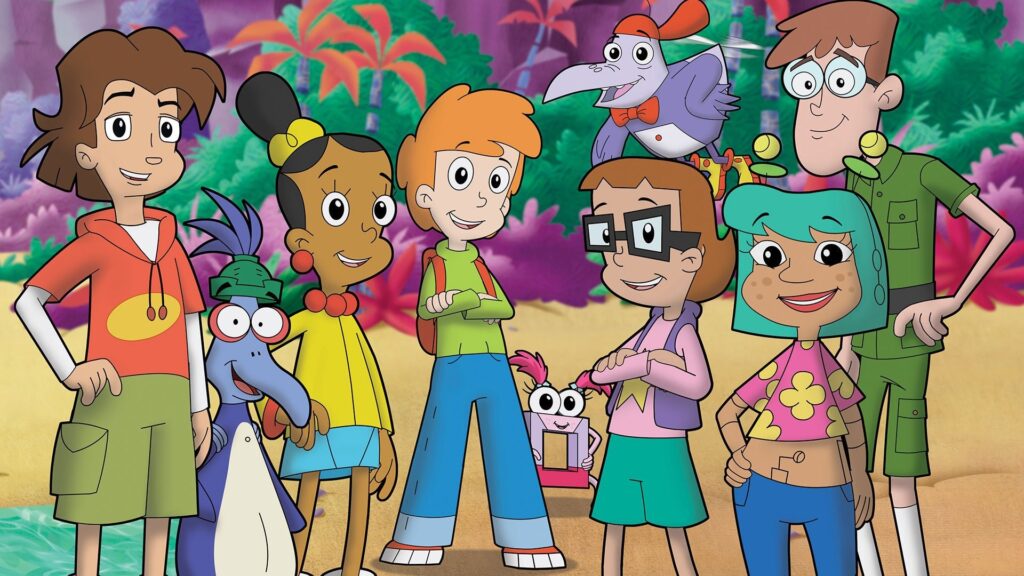
Recommended Ages: 6–9
Streams on: PBS Kids
Cyberchase pits a group of kids transported to Cyberspace against the villainous Hacker. To stop him, they must solve puzzles using math and logic, navigating digital worlds that visualize coding principles such as sequencing, variables, and loops. The mix of fantasy adventure and computer logic keeps older kids hooked while slipping in STEM fundamentals.
Why Cyberchase Is Great For Teaching Kids About Computers & Digital Literacy: A little older than the Helpsters above, Cyberchase appeals to older kids who like computers and the logical problem-solving challenges they offer. For kids who might be ready to start tinkering with a PC, the show ties abstract concepts to adventure, making learning them fun and memorable. It also introduces lessons in environmental and cyber ethics, showing that technology can be used for good when applied creatively.
The Best Educational Shows For Kids That Teach Environmental Studies
Nature knowledge meets stewardship. Wild Kratts explores animal adaptations, food webs, and habitats with “creature powers” that link traits to survival, while The Octonauts dives into marine ecosystems, species identification, and rescue-based conservation. Kids connect curiosity about animals to practical care for ecosystems and biodiversity.
Wild Kratts
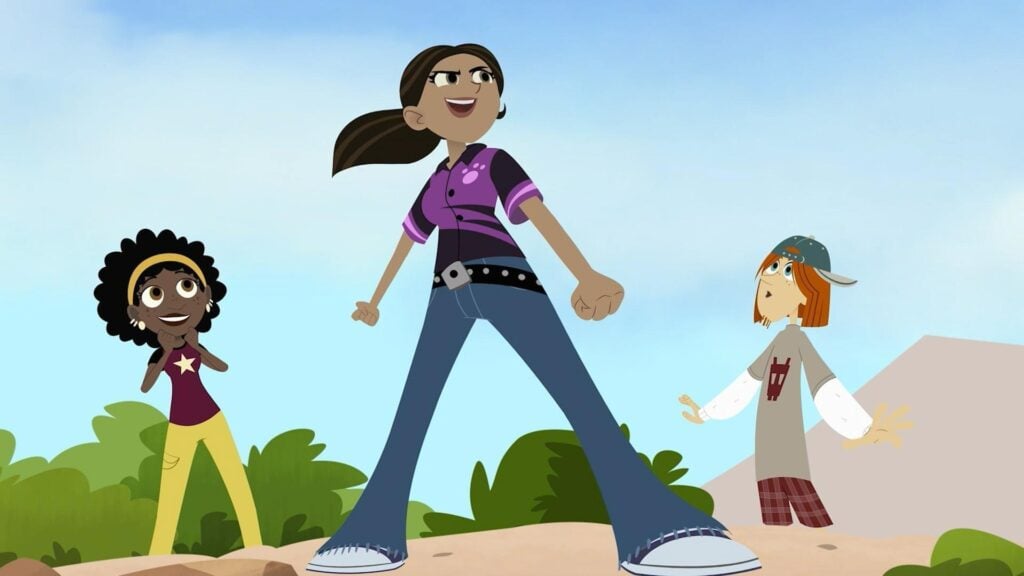
Recommended Ages: 6–9
Streams on: PBS Kids
In Wild Kratts, the real-life (but animated here) Kratt brothers explore animals and habitats, with emphasis on conservation and ecology. Using “creature power suits,” they transform into animals, gaining their abilities to solve environmental problems and rescue creatures in need. The show’s blend of real science, humor, and superhero energy keeps kids captivated while they learn.
Why Wild Kratts Is Great For Teaching Kids About Environmental Studies: Wild Kratts combines exploring, adventure, and science in the natural world. The show addresses real ecological and conservation issues and explains why ecosystems matter. It also fosters kids’ curiosity about nature and encourages them to take ownership of the world around them. Beyond wildlife facts, it subtly builds environmental ethics and a love of biodiversity that can grow with the child.
The Octonauts
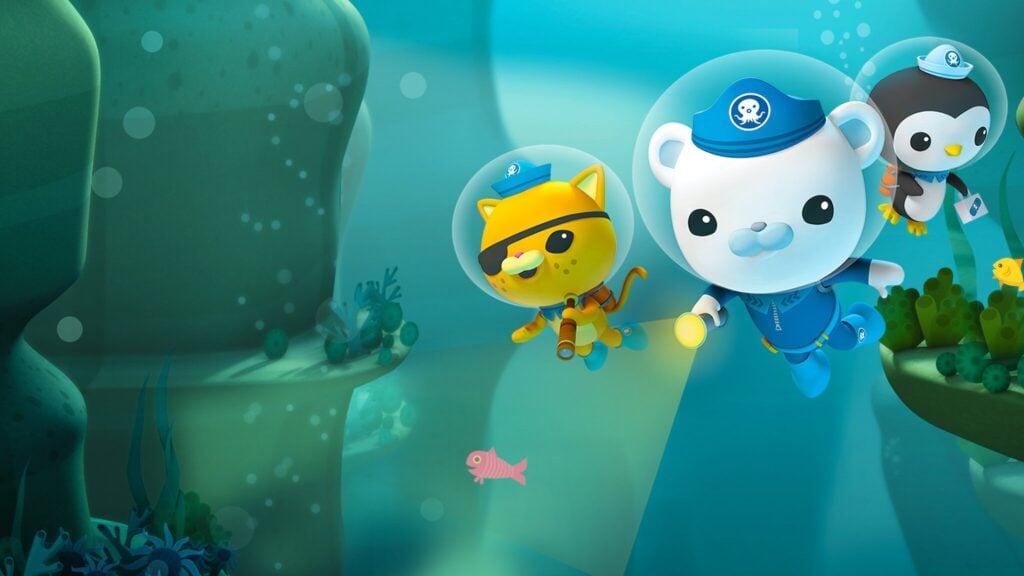
Recommended Ages: 3–6
Streams on: Netflix
Always one of my personal favourites, Octonauts features a team of adorable undersea explorers rescuing marine animals and working to save habitats. Each mission dives into a different ocean environment, introducing species from the deep sea to coral reefs. The cozy submarine setting and gentle tone make it both relaxing and adventurous for younger viewers.
Why The Octonauts Is Great For Teaching Kids About Environmental Studies: Kids will love the adventures and genuine dramatic tension (but not scary) within The Octonauts. The show teaches about various marine life and emphasizes the conservation and protection of the undersea environment. Plus, have I mentioned the catchy songs? Each episode’s “Creature Report” reinforces learning through repetition, helping children remember species facts and environmental stewardship in a fun, musical way.
The Best Educational Shows For Kids That Teach Physical Education
Movement is the curriculum. GoNoodle uses short, high-energy routines to practice coordination, balance, rhythm, and following directions, while Peppa Pig invites toddlers to copy playful motion—jumping, dancing, biking—in everyday scenes. Kids experience exercise as joyful, bite-sized activities that build confidence and body awareness.
GoNoodle
Recommended Ages: 3–10
Streams on: PBS Kids
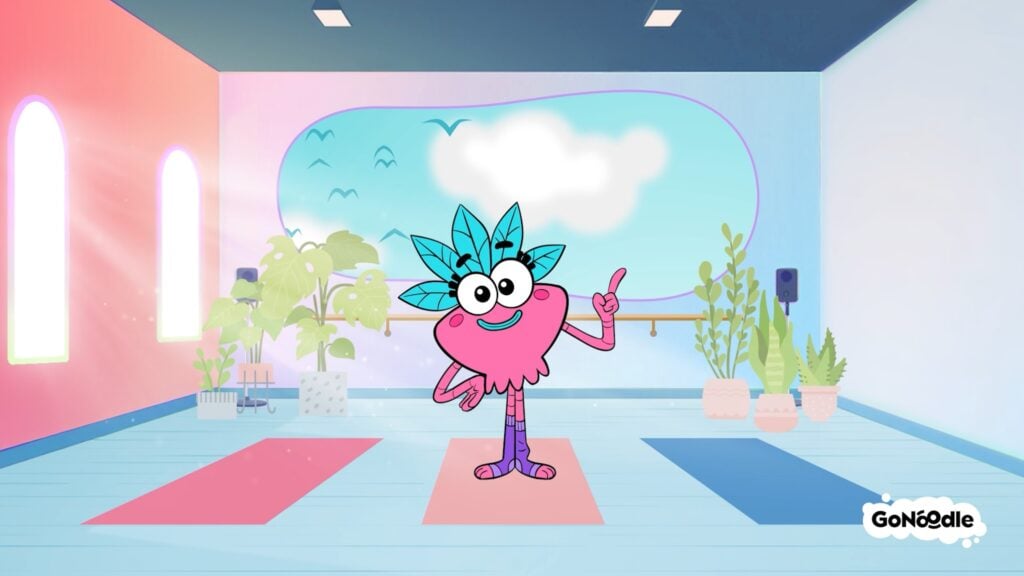
For kids just beginning to explore how their bodies move, GoNoodle offers short movement and dance segments to boost motor skills and active play. The videos feature high-energy instructors, colorful backdrops, and upbeat music that make exercising feel like a celebration rather than a routine. It’s the perfect indoor outlet for restless energy.
Why GoNoodle Is Great For Teaching Kids About Physical Education: The short GoNoodle episodes keep highly active kids engaged and encourage those who aren’t to get up and move. Kids will enjoy mimicking the dances and movement “challenges.” The show makes exercise seem fun, not a chore. It also helps develop coordination, balance, and rhythm, encouraging lifelong habits of movement and self-expression through activity.
Peppa Pig
Recommended Ages: 2–5
Streams on: Netflix / Nick Jr.
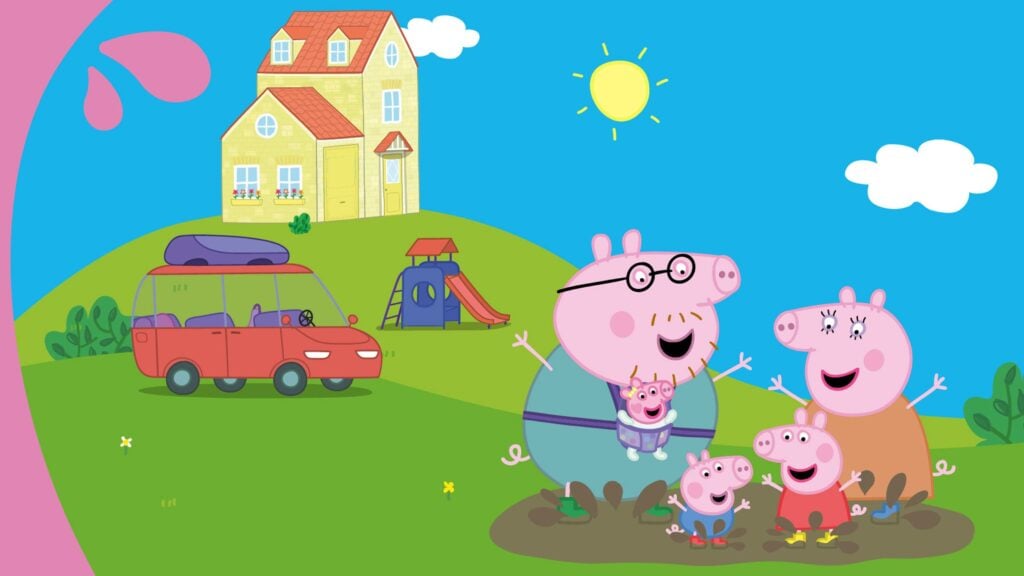
It might seem strange to put ol’ Peppa and crew under physical education, but episodes of Peppa Pig often feature games, dancing, and playful movement. Whether it’s jumping in muddy puddles, riding bikes, or playing tag, Peppa’s adventures are full of giggles and movement moments that toddlers can easily imitate.
Why Peppa Pig Is Great For Teaching Kids About Physical Education: Peppa’s whole world revolves around the fun of jumping up and down in muddy puddles. What toddler wouldn’t want to do that? Outside, or as part of a game, Peppa Pig takes a playful approach to movement that promotes physical coordination and fun. It’s a sweet reminder that staying active can mean playing with joy and imagination.
The Best Educational Shows For Kids That Teach Health & Well-Being
Social-emotional learning leads the way. Daniel Tiger’s Neighborhood teaches naming feelings, calming strategies, and problem-solving with catchy, repeatable songs, while Sesame Street models inclusion, kindness, and self-control alongside literacy and numeracy. Kids gain practical tools for handling emotions and getting along with others.
Daniel Tiger’s Neighborhood
Recommended Ages: 3–6
Streams on: PBS Kids
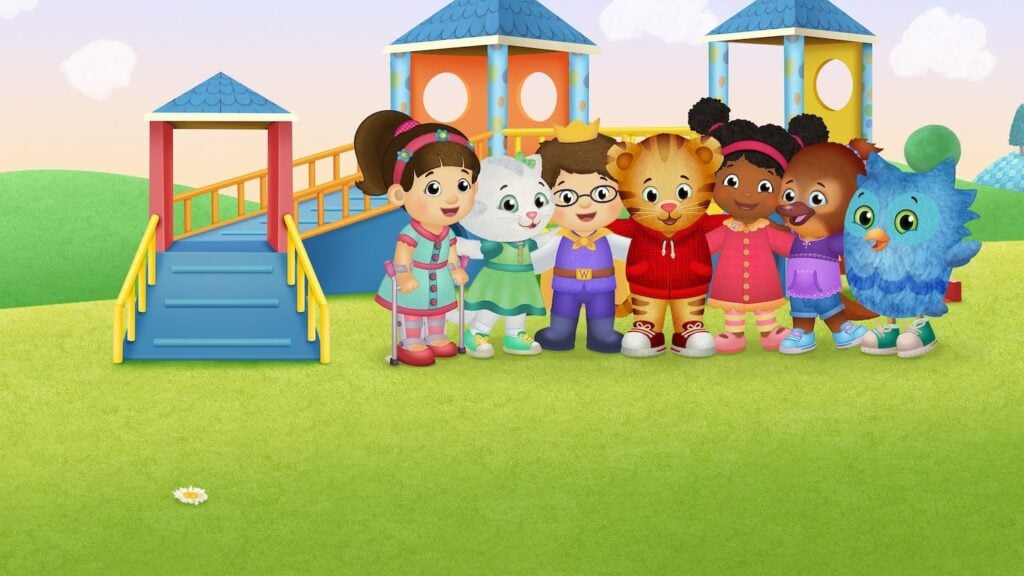
Daniel Tiger’s Neighborhood keeps kids engaged with short songs about managing feelings, sharing, and calming down. Each episode follows Daniel through familiar situations—like going to the doctor or feeling frustrated—and shows how to handle emotions using kind, practical strategies. The pacing and repetition make these emotional lessons stick.
Why Daniel Tiger’s Neighborhood Is Great For Teaching Kids About Health & Well-Being: Kids with big feelings will enjoy Daniel Tiger’s lessons, including learning practical strategies for handling emotions. The show’s use of repetition and relatable scenarios makes these strategies easy for kids to remember and apply in their day-to-day lives. It’s a masterclass in emotional intelligence for preschoolers, teaching mindfulness, empathy, and problem-solving in ways they can use immediately.
Sesame Street
Recommended Ages: 3–6
Streams on: HBO Max / PBS
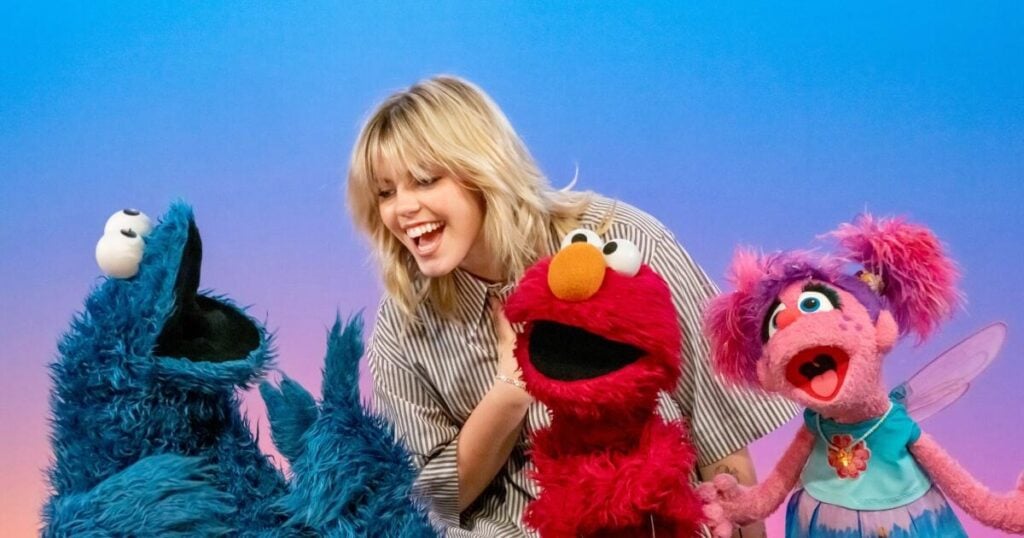
The idea of a world without Sesame Street is a cold, cold one. On Sesame Street, Muppets and humans model kindness, diversity, and emotional regulation, along with math, language, and vocabulary lessons that factor into everyday life. Its mix of humor, warmth, and cultural inclusivity has set the gold standard for children’s television for over five decades.
Why Sesame Street Is Great For Teaching Kids About Health & Well-Being: Sesame Street is the crown jewel of educational yet fun entertainment. The show teaches a myriad of skill,s including self-awareness and coping strategies. Kids connect with the characters and learn social and emotional skills by seeing feelings represented by Big Bird, Elmo, and all the residents of Sesame Street. It continues to evolve, with new lessons on inclusivity, resilience, and the modern challenges families face today.
The Best Educational Shows For Kids That Teach Music
Music fundamentals meet participation. Yo Gabba Gabba! exposes kids to genres, rhythm, and call-and-response through performance-driven segments and guest artists, while Ready, Steady, Wiggle! pairs simple movements with melody, pitch, and tempo so even the youngest can join in. Kids learn to listen, keep a beat, and express themselves through sound and song.
Yo Gabba Gabba!
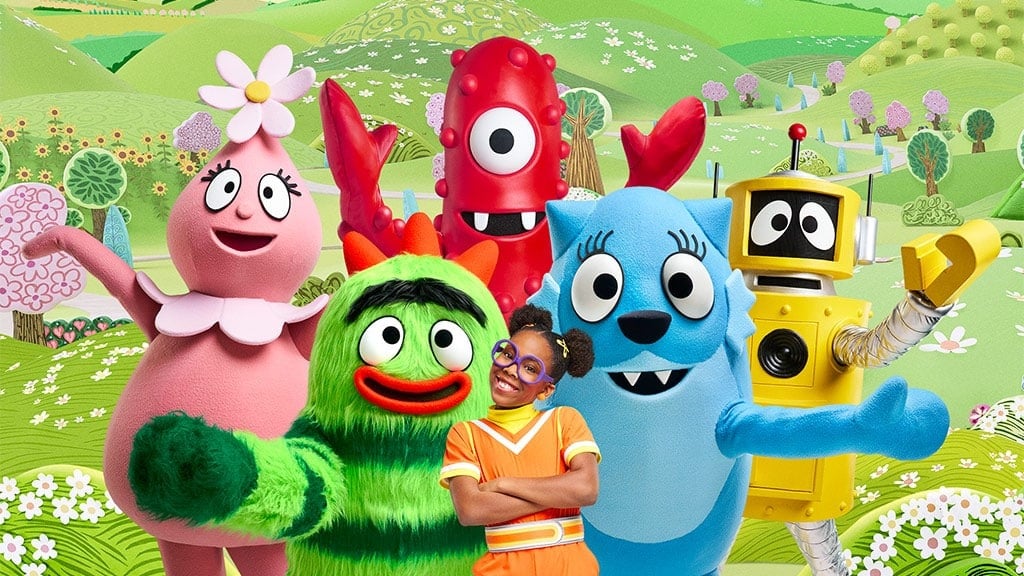
Recommended Ages: 2–6
Streams on: Netflix
In Yo Gabba Gabba! colorful characters and a who’s who of guest stars sing and dance to songs that teach social skills, movement, and basic performance concepts. The show combines puppet characters, animation, and live segments in a surreal, music-festival-for-kids atmosphere. Every beat is energetic, every lyric meaningful, and every episode full of discovery.
Why Yo Gabba Gabba! Is Great For Teaching Kids About Music: Guest stars like Jack Black, Kate Micucci, Weezer, and more contribute to Yo Gabba Gabba! as it teaches rhythm, melody, and music appreciation in a colorful, fun, and engaging way. The show introduces kids to all genres of music, from classical to hip hop, and never fails to make it fun along the way. It’s also an introduction to self-expression through music, helping even shy kids find their groove.
Ready, Steady, Wiggle!
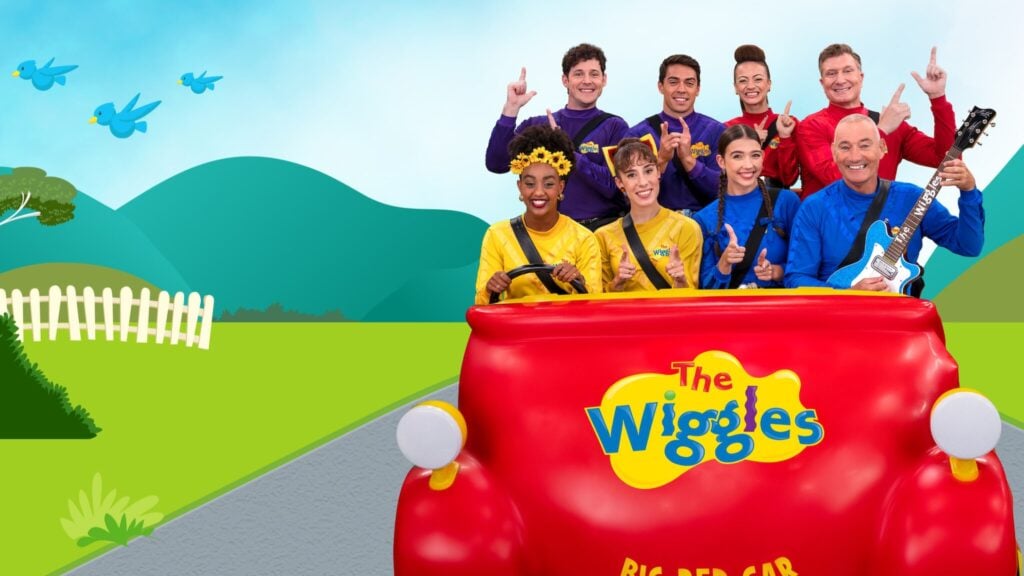
Recommended Ages: 0–5
Streams on: Netflix
There is really no group or person working in children’s entertainment that does it better than the Wiggles, in my humble opinion. The third generation of Wiggles pairs classic music with new tunes and visuals to introduce rhythm, pitch, and mood. Each song is paired with simple movements so even the youngest viewers can participate.
Why Ready, Steady, Wiggle! Is Great For Teaching Kids About Music: The Wiggles give kids short, catchy songs to bop to, while also teaching about acceptance, diversity, and playfulness. The way they format and re-imagine their music makes it generationally accessible, and as a live act, they can’t be beat (I’ve been three times, with my kids, obviously). It’s both a concert and a classroom, teaching music fundamentals wrapped in joyful performance.
The Best Educational Shows For Kids That Teach Performing Arts
Stagecraft becomes accessible. Julie’s Greenroom walks kids through rehearsal, voice, props, and collaboration to show how a production comes together. At the same time, The Muppet Show reveals the organized chaos of backstage teamwork through sketches, songs, and guest performances. Kids see that performance blends creativity with coordination—and that everyone’s role matters.
Julie’s Greenroom
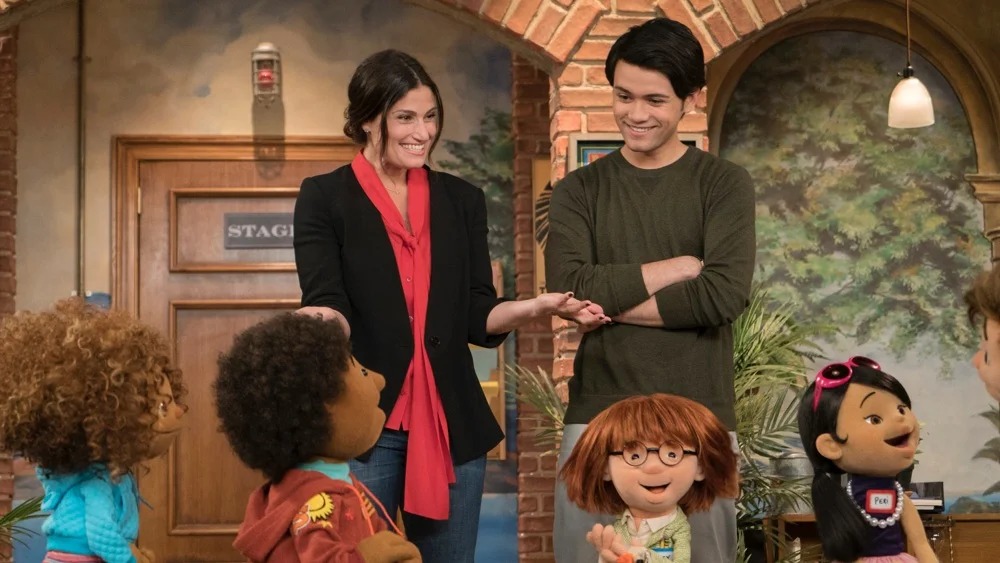
Recommended Ages: 4–8
Streams on: Netflix
Julie Andrews is a legend of screen and stage, and along with her puppet friends, Julie’s Greenroom teaches acting, stagecraft, and collaboration. Each episode takes place in a theater classroom where kids rehearse scenes, build props, and learn the elements of putting on a show. With its celebrity guests and gentle mentorship, it’s both inspirational and practical.
Why Julie’s Greenroom Is Great For Teaching Kids About The Performing Arts: Julie’s Greenroom is a perfect dramatic workshop for kids who love to perform. Budding entertainers will enjoy seeing how performances are built, as well as how teamwork and creative expression can boost confidence and be really, really fun! It emphasizes creativity, perseverance, and the joy of collaboration—core values in any performing art.
The Muppet Show
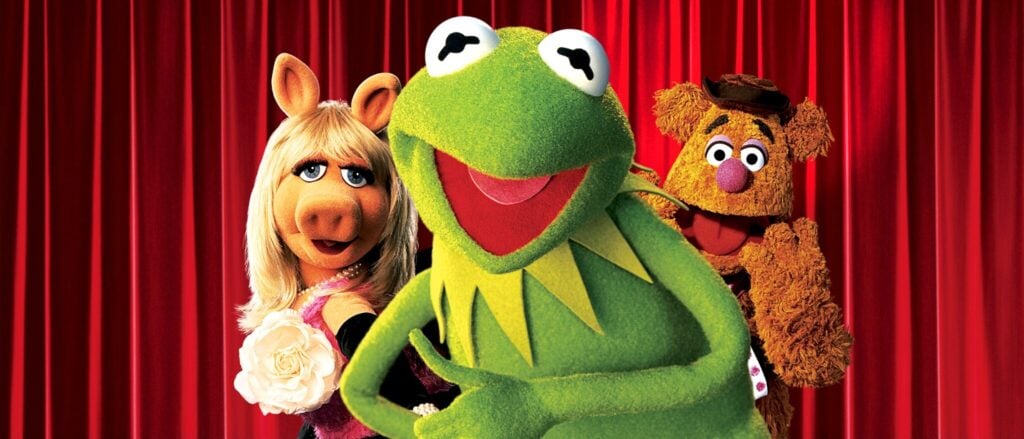
Recommended Ages: 6–10
Streams on: Disney+
You want the best look into the backstage life of a live production? Look no further than the Muppets, in their classic variety-show format. Each episode features guest stars, musical numbers, and chaotic behind-the-scenes antics, making it a timeless blend of comedy and creativity. It’s as entertaining now as it was decades ago.
Why The Muppet Show Is Great For Teaching Kids About The Performing Arts: The Muppet Show demonstrates how everyone works together to deliver an entertaining, fun performance. Kids will enjoy the mix of slapstick, borderline-vaudevillian humor, music, and acting. Within that, the show stresses that teamwork and creativity are what make performance fun. It also introduces kids to the art of storytelling through song and sketch, inspiring both laughter and imagination.